

Choosing the Right Office Chair for Short People
- Updated:
About the author:

Mike Karle
“Create Healthy Workspaces”
Short people often struggle to find an office chair that feels comfortable. The problem is not your body. The problem is that office chairs are typically designed around the "average" person. If you are shorter than average, you may have experienced the frustration of sitting in an office chair where your feet do not touch the floor, the seat feels too deep, the lumbar support sits in the wrong position, or your shoulders feel tense by the end of the day. You are not alone. Many office chairs are designed for people around average height, which means they may not provide the support a shorter person needs.
The right office chair should fit your body, not force your body to adapt to the chair.
In this guide, you will learn what to look for when choosing an office chair for a shorter person, including the adjustments that make the biggest difference to comfort, posture and long-term support.
Why Most Office Chairs Do Not Suit Short People
Office chairs are typically designed around average body measurements. However, people are not built the same. Two people of the same height can have very different leg lengths, torso lengths and body proportions. This means height alone is not enough when choosing a chair. For shorter people, the most common problems include:
- Feet not resting flat on the floor.
- The seat being too deep, preventing proper back support.
- Lumbar support in the incorrect position.
- Armrests being too far apart or too high.
- A desk that feels too tall when the chair is adjusted correctly.
These issues can force you into awkward sitting positions, creating unnecessary pressure on your lower back, neck and shoulders. A comfortable office chair should support your natural posture without requiring constant adjustment throughout the day.
Sitting in a chair that is too large for your body may seem like a minor inconvenience, but spending eight hours a day in a poor sitting position can contribute to ongoing discomfort and fatigue.
Yolandi's Experience: Finding a Chair That Fits
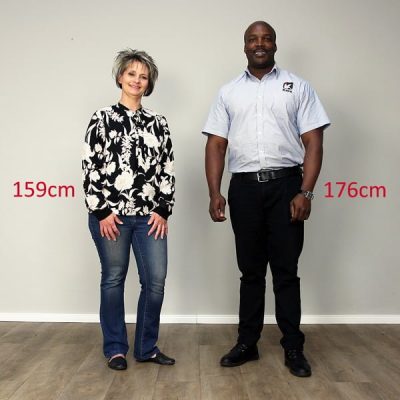
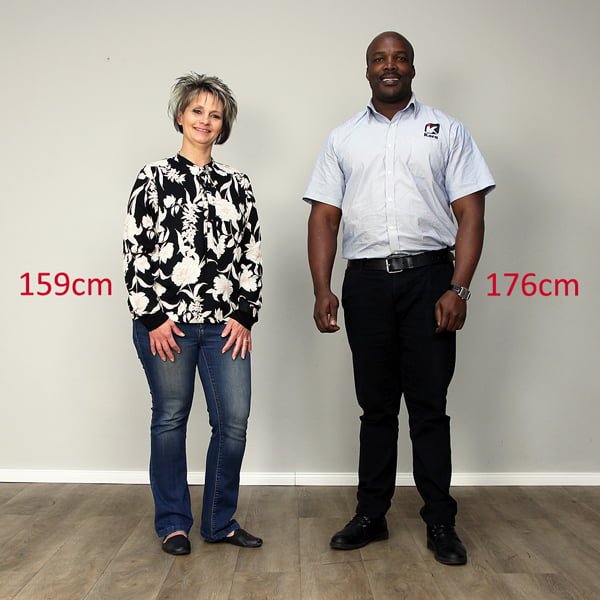
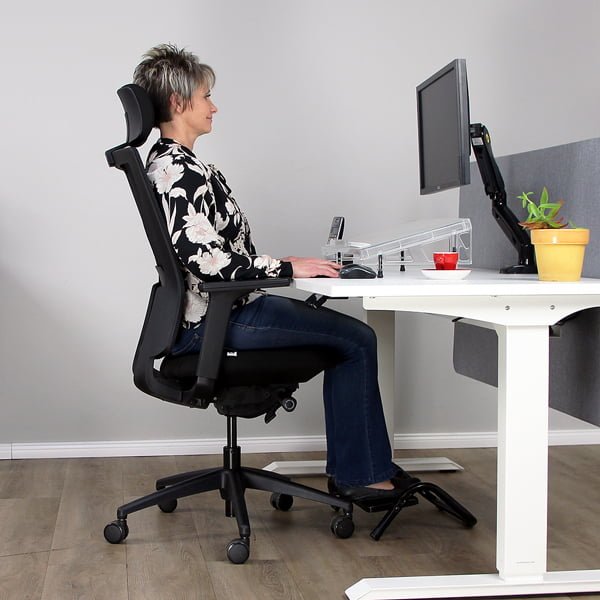
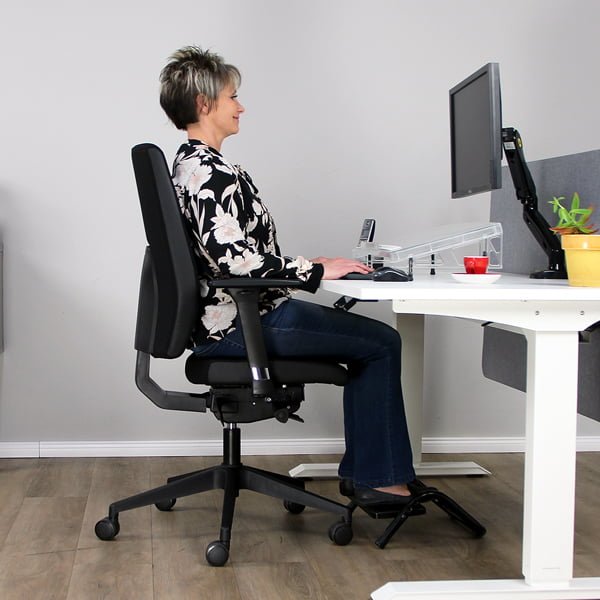
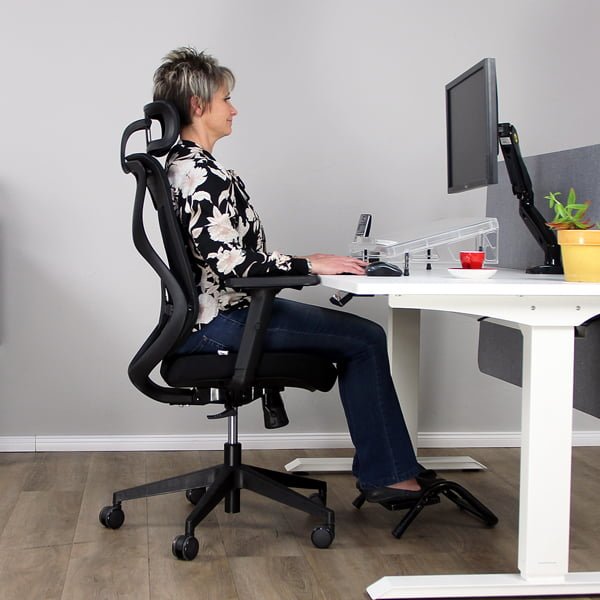
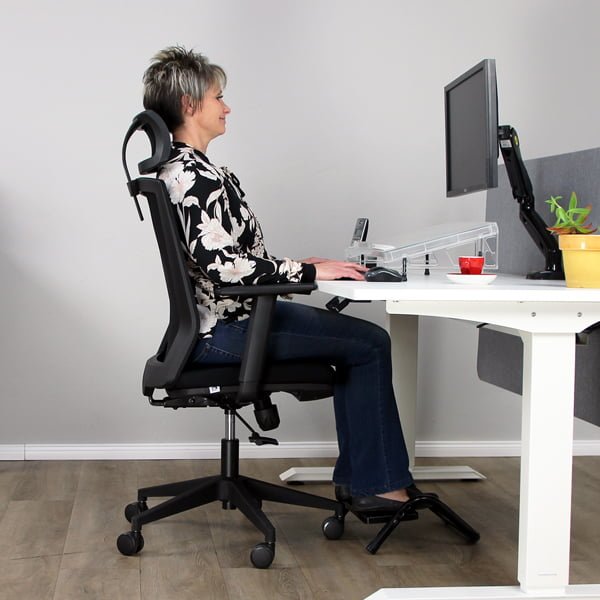
Yolandi is 159 cm tall. Like many shorter people, she found that many office chairs simply did not feel right. The seat depth was often too large, leaving a gap between her lower back and the chair's lumbar support. The seat height also made it difficult for her feet to sit comfortably on the floor.
The problem is not Yolandi's posture. The problem is that chairs are designed for someone with a larger frame.
After testing different models, Yolandi found 4 which allowed her to sit comfortably with:
- Her feet supported on the floor.
- Her back fully supported by the backrest.
- The lumbar support positioned correctly.
- Her shoulders relaxed.
Each chair provided the adjustments she needed to support her smaller frame.
The 5 Things to Check When Choosing an Office Chair for Shorter People
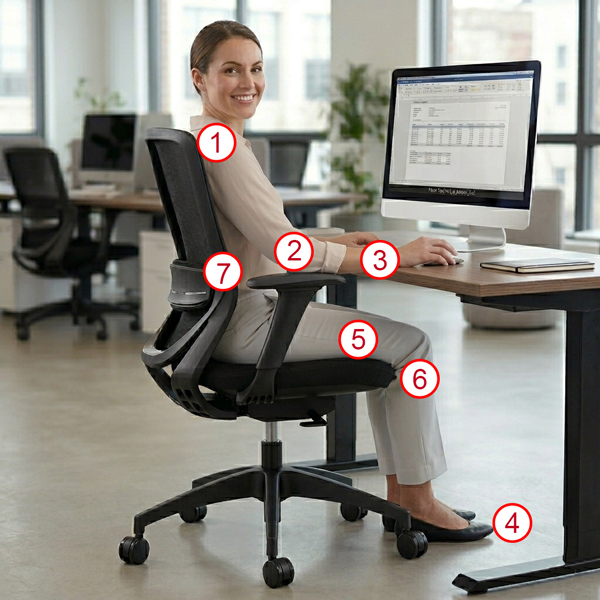
Finding the right chair does not need to be complicated. Focus on these five areas:
- Seat height
- Seat depth
- Lumbar support
- Armrest adjustment
- Desk height compatibility
These adjustments determine whether a chair supports your body or works against it.
Use our Chair Selector or visit our showroom to help find your perfect fit.
1. Adjustable Seat Height: The Foundation of Comfort
Office ergonomics focuses on designing furniture and equipment to fit the user's needs, and adjustability plays a pivotal role.
An office chair that doesn't properly fit the user, will be uncomfortable.
Your feet should sit flat on the floor while your knees remain slightly lower than your hips. This position helps maintain a natural sitting posture and reduces pressure on the back of your legs. For shorter people, many standard office chairs are simply too high which can result in:
- Feet dangling above the floor. Why Your Feet Might Be Dangling — Even With the Perfect Setup
- Increased pressure under your thighs.
- Reduced lower back support.
- Slouching to compensate.
A shorter person will generally benefit from a chair with a lower minimum seat height. For example, someone around 159 cm tall will typically require a seat height in the 37–42 cm range, while taller users will need a higher adjustment range. What is the Correct Ergonomic Height for my Office Chair, Desk and Computer Monitor?
The important point is not your height alone, it is whether the chair can adjust to your body.
2. Look for Adjustable Seat Depth
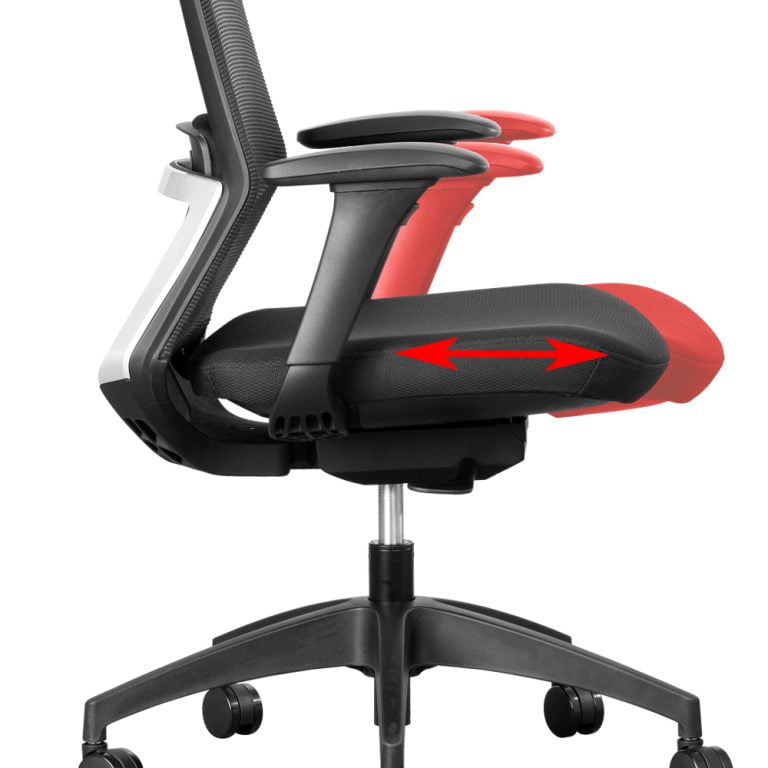
Seat depth is one of the most overlooked features for both taller and shorter people. When the seat is too deep, the front edge of the chair can press behind your knees. To avoid this pressure, many people slide forward, leaving their lower back unsupported. This creates a chain reaction:
- Your pelvis rotates backwards.
- Your lower back loses its natural curve.
- Your shoulders move forward.
- Your neck works harder to support your head.
A shorter seat depth, or adjustable seat depth, allows you to sit fully back against the backrest while keeping a 2-3 finger gap behind your knees. For many shorter users, an adjustable seat depth between 40 and 45 cm is ideal. The anatomy of sitting - what happens when you sit?
3. Make Sure the Lumbar Support Matches Your Back
Good lumbar support is important for everyone, regardless of height. However, shorter people often find that fixed lumbar supports sit too high and press against the wrong area of their back. The best ergonomic chairs allow the lumbar support to be adjusted both:
- Vertically, so it aligns with your lower back.
- Horizontally, so you can control the amount of support.
When combined with the correct seat depth, adjustable lumbar support helps you maintain a more natural spine position. Look for chairs with backrests that extend to at least the shoulder blades or above. This ensures proper support for the entire back, preventing strain on the upper back and shoulders. Back support for an office chair – why it’s important.
4. Adjustable Armrests: Short Arms, Big Comfort
Whether you are tall, short or of average build, only consider office chairs with adjustable armrests that can be positioned at the appropriate height and width to comfortably support your forearms.
The elbows should be bent at approximately 90° and in line with the top surface of the desk.
- When armrests are too high, your shoulders are forced upwards, which can contribute to neck and shoulder tension.
- When armrests are too low, you may lean forward and place additional strain on your upper back and shoulders.
Shorter people should look for armrests that adjust in height and width. This allows the armrests to move closer together and support a smaller frame. What is the best office chair armrest for me?
5. Adjusting the Office Desk for Shorter People
Standard desks are about 73cm high. This height is based on the average height of the population.
If a short person sits at the correct height (knees slightly below the level of the hips and their feet flat on the floor), a standard desk will usually be too high for comfortable use. Typically, they will have to 'stretch' up to the desk surface which causes muscular pain in the back, neck and shoulders.
To avoid back, neck and shoulder pain, short people should lower the height of their desk. If they are unable to use a height-adjustable desk, they should raise the height of the chair and use a footrest to support their feet.
Watch the video for more detail on setting up your workstation.
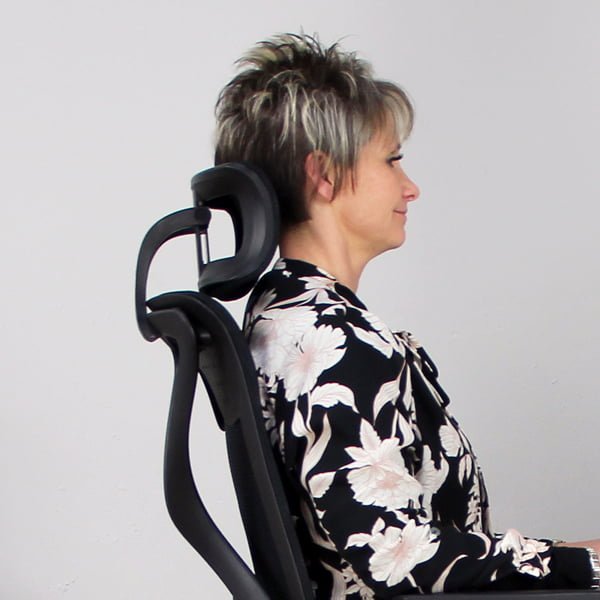
Do Short People Need a Headrest?
While headrests might not be as common in office chairs for short people, they can still provide much-needed support for the neck and head during moments of relaxation.
If you are short and prefer an office chair with a headrest, you should ensure that it can be adjusted low enough to support your neck and head.
Office Chair Mechanism
Chairs with recline mechanisms allow users to change their sitting position throughout the day. This stimulates the muscles in the back, core and legs which decreases the possibility of muscular pain in the shoulders and back. Look for chairs with a tilt feature that promotes dynamic sitting. Furthermore, the spring tension in the chair tilt mechanism should be adjustable, especially if you are short and slightly built. Office Chairs with an Automatic Self-Adjusting Tension Mechanism
The Best Office Chair for a Short Person Is the One That Fits You
Being shorter should not mean accepting an uncomfortable office chair. The right chair should allow you to sit naturally, with your feet supported, your back aligned and your shoulders relaxed. The key is choosing a chair with enough adjustment to fit your body:
✓ Adjustable seat height
✓ Adjustable seat depth
✓ Adjustable lumbar support
✓ Adjustable armrests
✓ A mechanism that allows Dynamic Sitting and supports movement.
At Karo, we understand that one chair does not fit every person. That is why our ergonomic office chairs are designed with adjustability in mind, helping people of different shapes and sizes create healthier workspaces. If you are unsure which chair suits your body, use our Chair Selector or contact our team for guidance.
Finding the right office chair is not about being tall, short or average. It is about finding a chair that fits you.
Make a Showroom Appointment
By the same author:

Why Office Chair Seats Should Include Moulded Polyurethane Foam
For greater comfort and durability, good quality office chairs should have seats manufactured with moulded polyurethane foam.
Why Every Production Line Needs the Right Industrial Chair
Invest in the right industrial chair to boost productivity, reduce injuries, and support factory workers on your production line.

Why Automated Fabric Cutting improves quality
High quality office and casino seating requires advanced automation, like automated fabric cutting.