

Orthopedic vs Ergonomic Office Chairs: What’s the Difference and Which Should You Choose?
- Updated:
About the author:

Ronel Hendry
“Create Healthy Workspaces”
Have you ever bought an ergonomic office chair, only to find your back still hurts after a long day? Maybe you’ve heard of orthopedic office chairs but aren’t sure if they’re any different, or if it's just marketing hype. You’re not alone. Many people invest in the wrong chair and still struggle with lower back pain, neck tension, or even sciatica. The good news? Once you understand the difference between ergonomic and orthopedic chairs, you can make a confident choice that supports your health instead of working against it.
Summary
What is an ergonomic office chair?
An ergonomic chair is designed to support healthy posture and reduce strain during long periods of sitting.
What is an orthopedic office chair?
An orthopedic chair is designed to provide enhanced support and adjustability for people with pre-existing back pain or spinal discomfort.
Which chair should you choose?
- If you’re generally healthy and want a comfortable office chair that prevents back pain, choose an ergonomic chair.
- If you have a pre-existing medical condition like sciatica or chronic back pain, an orthopedic chair is the better choice.
1. Ergonomic Office Chairs Explained: Who They’re Best For
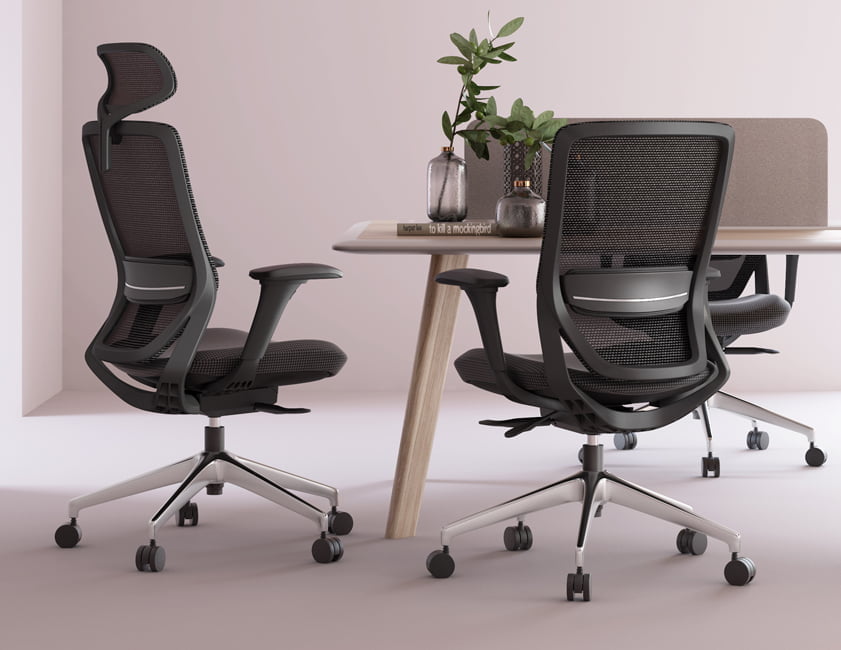
An ergonomic office chair is designed for the average person who spends long hours sitting at a desk. Its main goal? Prevent pain before it starts.
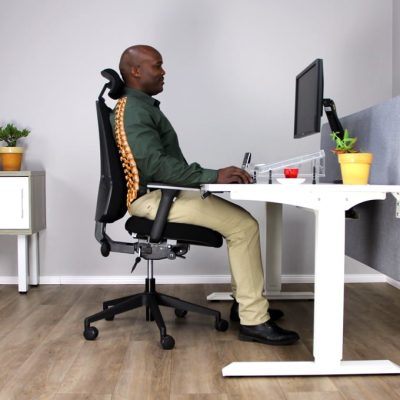
Think of it as your everyday posture coach. Ergonomic chairs encourage proper alignment of your spine, shoulders, and hips, reducing the risk of strain from sitting too long. A critical aspect of any ergonomic office chair is ADJUSTABILITY - Why a fully adjustable office chair is important.
Ergonomic chairs are general-purpose solutions focused on promoting good posture and preventing discomfort. Orthopedic chairs are advanced options for anyone with chronic lower back pain.
Key Features of a Good Ergonomic Office Chair
- Seat height adjustment.
- Backrest angle adjustment.
- Adjustable lumbar support.
- Adjustable seat depth.
- Height adjustable armrests.
- Contoured backrest that follows your spine's natural curve.
- Moulded foam seat with a waterfall front edge.
Ergonomic Chairs are best for: People without chronic pain who want to stay comfortable and supported throughout the day.
2. Orthopedic Office Chairs: Designed for Chronic Pain Relief
An orthopedic office chair takes things further. It’s designed for people already dealing with musculoskeletal conditions like sciatica, or chronic back pain.
Medical professionals often recommend these chairs because they don’t just prevent discomfort—they actively help relieve it.
Orthopedic chairs are best for: Anyone with pre-existing conditions like persistent back pain, or sciatica.
a. What Makes an Orthopedic Chair Different?
Orthopedic chairs have more advanced adjustability for easing lower back and sciatica pain. These chairs have a:
i) Free-Float Swivel Mechanism
These mechanisms enable you to adjust the seat and backrest angles independently to suit your unique body shape. Because the seat can be tilted into a forward-sloping position, it reduces the pressure on lumbar discs and so alleviates lower back pain.
ii) Height-Adjustable Backrest
A height adjustable backrest allows you to align the chair perfectly with your spine. Some models, like the OrthoMax, include independently adjustable lumbar support and an inflatable lumbar cushion for customised comfort.

b. Why is a Forward Sloping Seat (Negative-Tilt) Important on an Orthopedic Chair?
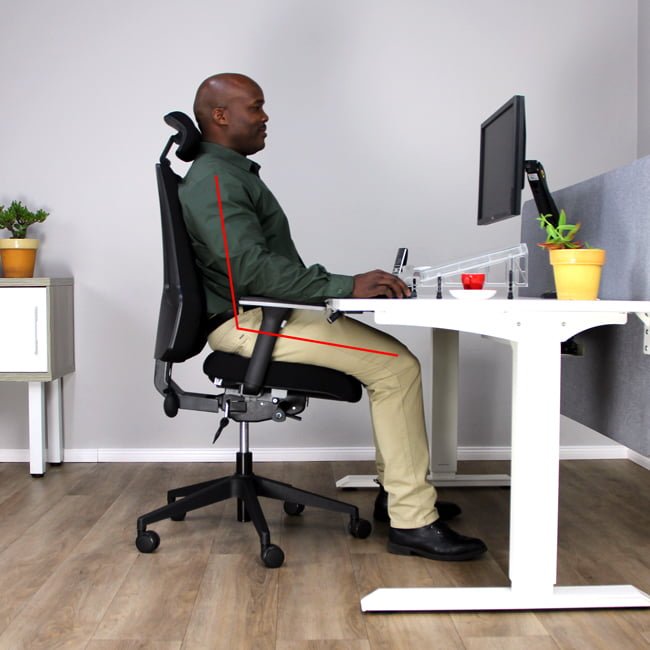
By independently controlling the angles between the backrest and the seat, orthopedic office chairs may help reduce pressure and improve sitting comfort for some users with spinal conditions. What actually happens when you sit?
The free-float mechanism on an orthopedic office chair allows the seat to be adjusted to a forward sloping position. This reduces the disc pressure in the lumbar region of the back.
The forward slope, or negative tilt, is typically limited to a maximum of 5 degrees.
3. Side-by-Side Comparison: Ergonomic vs Orthopedic Office Chairs
| Feature | Ergonomic chair | Orthopedic chair |
|---|---|---|
| Swivel and Tilt Mechanism | Synchronous (synchro) | Fully independent free-float mechanism |
| Seat Foam | High-density automotive grade moulded foam | High-density automotive grade moulded foam |
| Seat angle adjustment | Limited to the movement allowed by the synchronous mechanism | Fully independent and lockable in any position |
| Negative tilt (forward sloping) seat adjustment | No | Yes, up to 5 degrees |
| Backrest angle adjustment | Limited to the movement allowed by the synchronous mechanism | Fully independent and lockable in any position |
| Backrest height adjustment | Optional | Optional |
| Lumbar support | Yes, on higher-end ergonomic chairs | Yes |
| Best for | Preventing discomfort | Relieving existing back conditions |
4. How Orthopedic Chairs Improve Posture Compared to Ergonomic Chairs
a. More Aggressive Lumbar Support
Most ergonomic chairs provide adjustable lumbar support that helps maintain the natural curve of the lower back. Orthopedic chairs typically offer more pronounced lumbar support designed to actively maintain spinal alignment and prevent the pelvis from rolling backwards into a slouched position. This helps maintain the spine's natural S-curve for longer periods.
b. Better Pelvic Positioning
Poor posture often starts with the pelvis. When the pelvis tilts backwards, the spine follows, resulting in slouching. Orthopedic chairs utilise a free-float mechanism. This ensures that the seat angle can be set at a negative tilt (forward slope), to create an ‘open’ angle at the hips of up to 100 degrees. An ‘open’ seated position reduces stress in the lumbar region of the back and creates a stronger foundation for good posture.
c. Enhanced Thoracic Support
While standard ergonomic chairs focus heavily on lumbar support, orthopedic chairs often provide additional support through the mid-back (thoracic region). This encourages a more upright sitting position.
d. Pressure Distribution
Orthopedic seating is often engineered to distribute body weight more evenly across the seat and backrest. This reduces pressure points and encourages users to maintain proper posture rather than shifting into unhealthy positions to relieve discomfort.
Choosing the right chair isn’t just about comfort, it’s about your health and how you work every day. In this video, we compare two chairs from our range to explain the key differences:
- ErgoBack Ergonomic Chair – designed for adjustability, long-hour comfort, and everyday use.
- OrthoMax Orthopedic Chair – built to provide targeted support for people with specific back or posture needs.
5. Heavy-Duty Orthopedic Chairs for Larger Builds
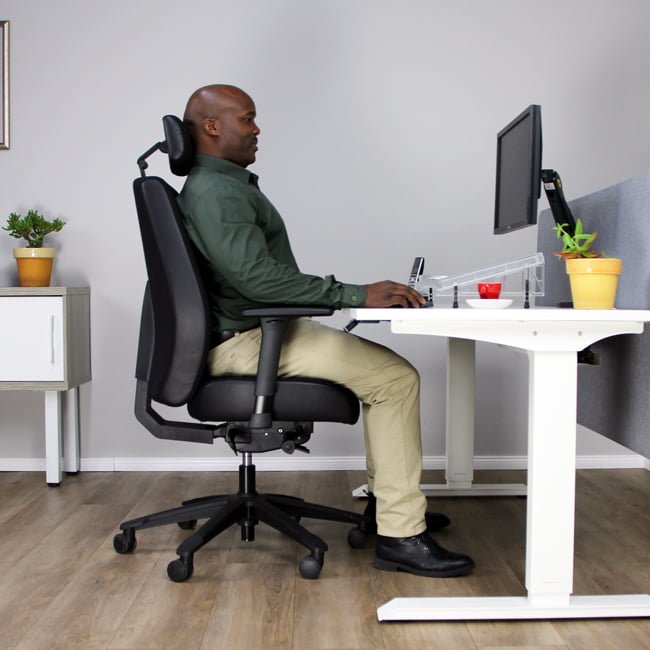
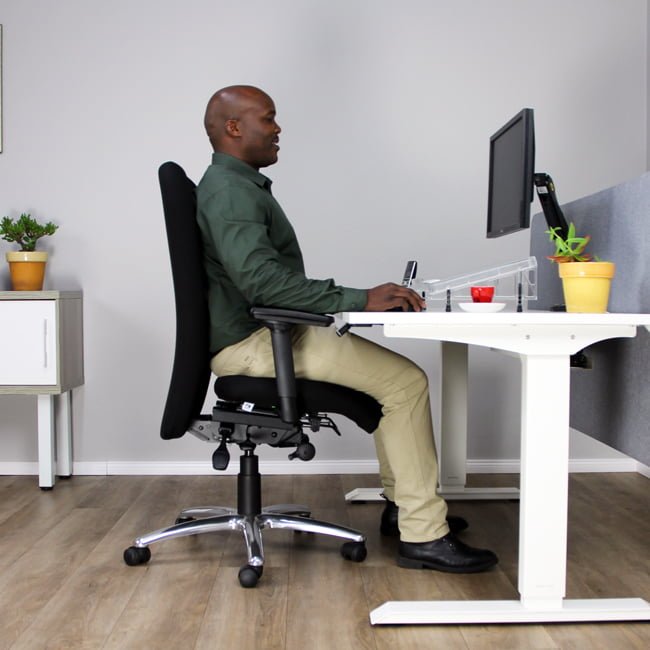
If you’re taller, broader, or need a chair that supports extra weight, a standard task chair may not cut it. Heavy-duty orthopedic chairs combine strength and medical-grade support, making them a smart investment for both comfort and durability. Typical examples include:
6. Which Chair Is Best for Sciatica?
Sciatica happens when the sciatic nerve is pinched, often leading to sharp lower-back and leg pain.
For sciatica relief, you need:
- A forward tilting seat to reduce disc pressure in the lumbar back.
- Excellent, adjustable lumbar support.
That makes an orthopedic office chair the best choice for sciatica sufferers.

FAQs: Orthopedic vs Ergonomic Office Chairs
a. What is the difference between an ergonomic and orthopedic office chair?
An ergonomic chair is designed to prevent discomfort by supporting healthy posture during long sitting periods. An orthopedic chair is designed to provide enhanced support for people already experiencing conditions such as chronic back pain or sciatica.
b. Do ergonomic office chairs help with back pain?
An ergonomic chair can reduce the risk of developing back pain by supporting better posture and spinal alignment. However, if you already have chronic or severe back pain, you may need a more specialised orthopedic chair for targeted support.
c. Who should use an orthopedic office chair?
An orthopedic chair is best suited for people with ongoing musculoskeletal issues such as lower back pain, sciatica, or spinal conditions. It is designed to provide deeper adjustment and support than a standard ergonomic chair.
d. Can an orthopedic chair cure back pain?
An orthopedic chair does not cure back pain, but it can help reduce pressure on the spine and improve sitting posture. This may lead to reduced discomfort when combined with correct workstation setup and regular movement.
e. Are orthopedic chairs better than ergonomic chairs?
Neither chair is universally “better.” Ergonomic chairs are better for prevention and general comfort, while orthopedic chairs are better for users with existing back or spinal conditions.
f. Do I still need a good desk setup if I have the right chair?
Yes. Your chair is only one part of your setup. Desk height, monitor position, and keyboard placement all play a major role in reducing strain and supporting healthy posture.
g. Is 'orthopedic' just marketing?
No. Compared to an ergonomic chair, an orthopedic chair has more advanced adjustability. This allows for greater user customisation to address specific back-related ailments.
Conclusion: Choosing the Chair That Fits You
The difference between ergonomic and orthopedic chairs comes down to how your body feels today. One is built to support healthy sitting habits, while the other is designed to provide more targeted support when discomfort is already part of your daily routine.
If you are generally comfortable and want to protect your back during long hours at your desk, an ergonomic chair gives you the adjustability and support needed for everyday use. If you are dealing with ongoing lower back pain, sciatica, or a diagnosed spinal issue, an orthopedic chair offers more precise adjustment options to help reduce strain while you sit.
The right choice is the one that matches your body. If you are still unsure, the safest next step is to get properly assessed so your chair setup matches your specific needs.
By the same author:

Healthy Sitting Position at a Desk: How to Sit Correctly at Work
How to sit correctly at your desk to reduce back pain, fatigue and posture problems

Ergonomics of an Adjustable Standing Desk: Benefits, Setup and Best Practices
What are the ergonomics of a standing desk? What types of height adjustable desks are available and which is best?

Corporate Office Chairs That Deliver Lasting Value: The Project 6 Advantage
Discover why the Project 6 corporate office chairs are the smart choice for projects, delivering comfort, reliability and long-term value.