

What Is A Heavy Duty Orthopedic Chair?
- Updated:
About the author:

Mike Karle
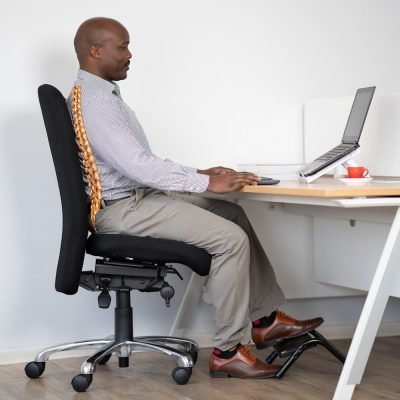
“Create Healthy Workspaces”
If you have a larger build and need a high-back chair, most standard task chairs designed for individuals of up to 120kg will not be suitable for you. To complicate matters, if you have a back-related ailment, you face an additional hurdle. Not only do you require a heavy duty office chair, but also an orthopedic one that will provide the correct support for your back. What is an orthopedic chair and how is it different to an ergonomic chair?
Many retailers claim to sell “heavy duty” chairs, but most of these do not qualify as being “heavy duty”. The same argument applies to “orthopedic” chairs.
Definition:
A Heavy Duty Orthopedic office chair is one that has high-strength components and a weight rating of at least 150kg. To be classified as 'orthopedic', the chair must be fitted with a Free-Float swivel mechanism.
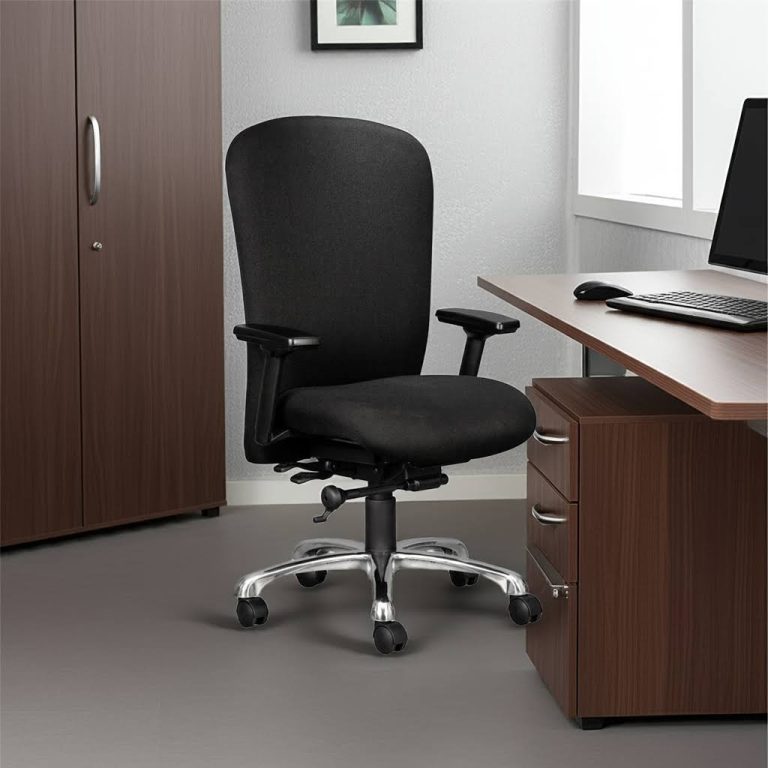
Heavy-Duty Orthopedic Chairs with a 180kg weight rating
Unfortunately, there are not many office chairs available in South Africa that combine both the heavy duty and orthopedic attributes. The Ultimate Guide to Office Chair Weight Limits
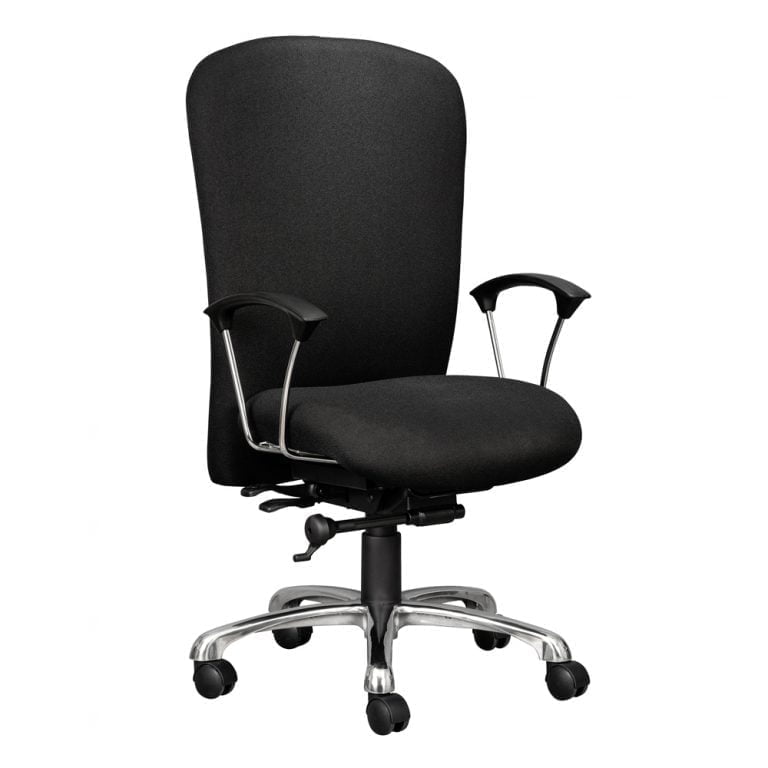
The Heathrow and Ortho2XL are heavy duty orthopedic chairs designed for individuals up to 180kg, making them ideal for use in control rooms and call centres.
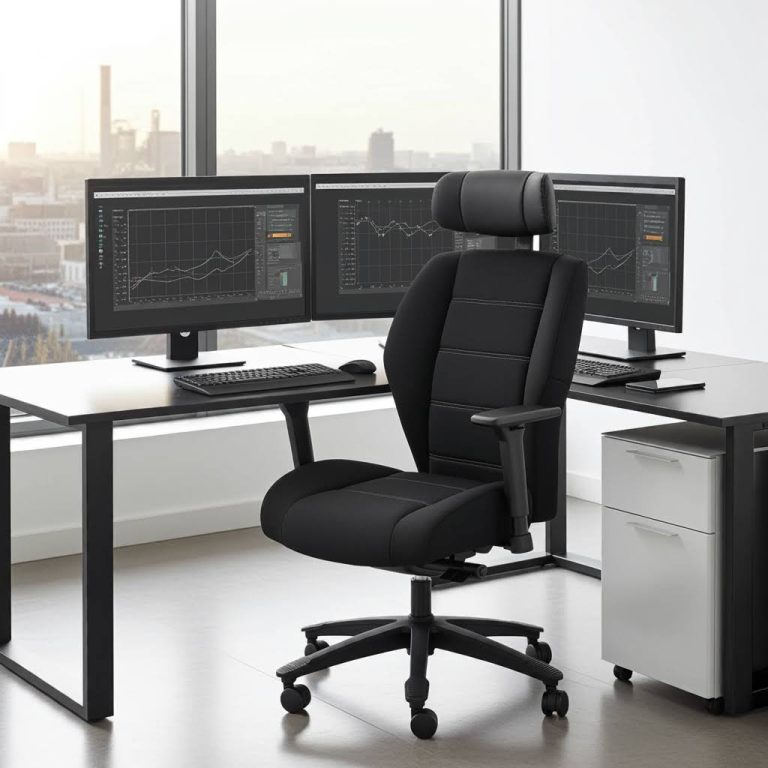
What makes a chair “Heavy Duty and Orthopedic”?
- Firstly, a heavy duty chair should have superior strength and durability. If you have a larger build, the chair should be physically bigger and more generously proportioned.
- Secondly, the chair must provide the correct orthopedic support for your body. What is an orthopedic office chair?
1. What will make a chair “Heavy Duty”?
To make a chair that is stronger and more durable, its overall design needs to take the higher performance requirements into account. This means that the combination and strength of 5 of its 6 major components, is vital. The 6th component (headrest), is optional.
Note: Not all heavy duty chairs need a headrest.
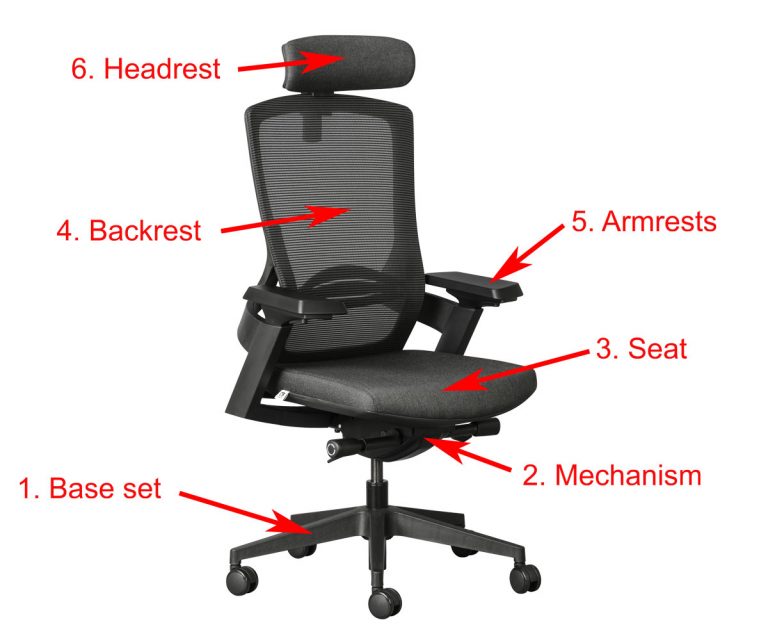
1.1 The Base Set
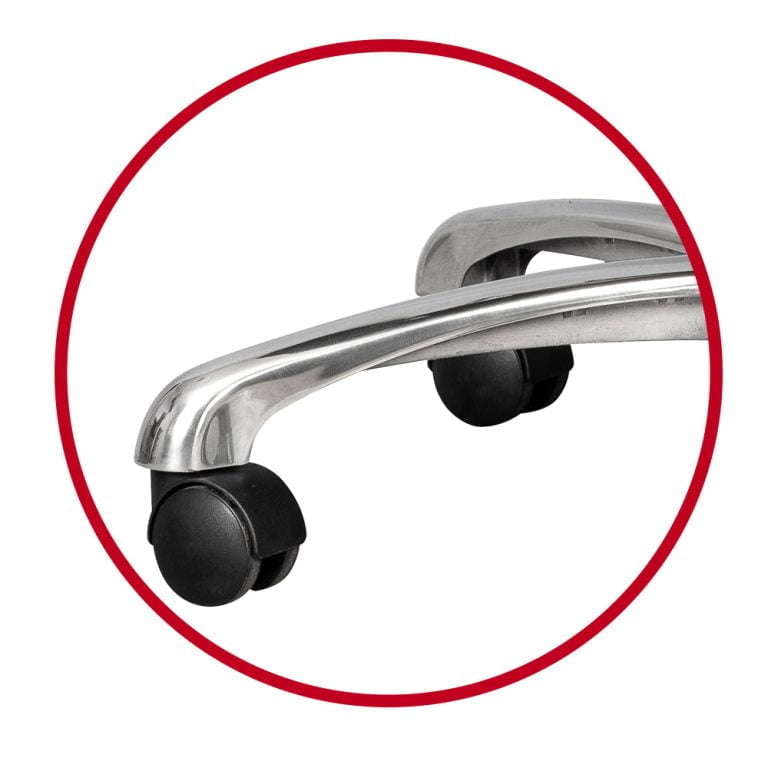
a. Castors or Wheels
For a heavy duty office chair, it is better to have large diameter castors. Larger wheels result in a higher carrying capacity, so 60 or 75mm diameter castors will carry a greater load and be more maneuverable.
If the chair is used on a hard surface such as a tiled floor, soft rimmed castors roll better and won’t damage the floor. Hard castors work fine on a carpeted floor.
b. The 5-Star Base
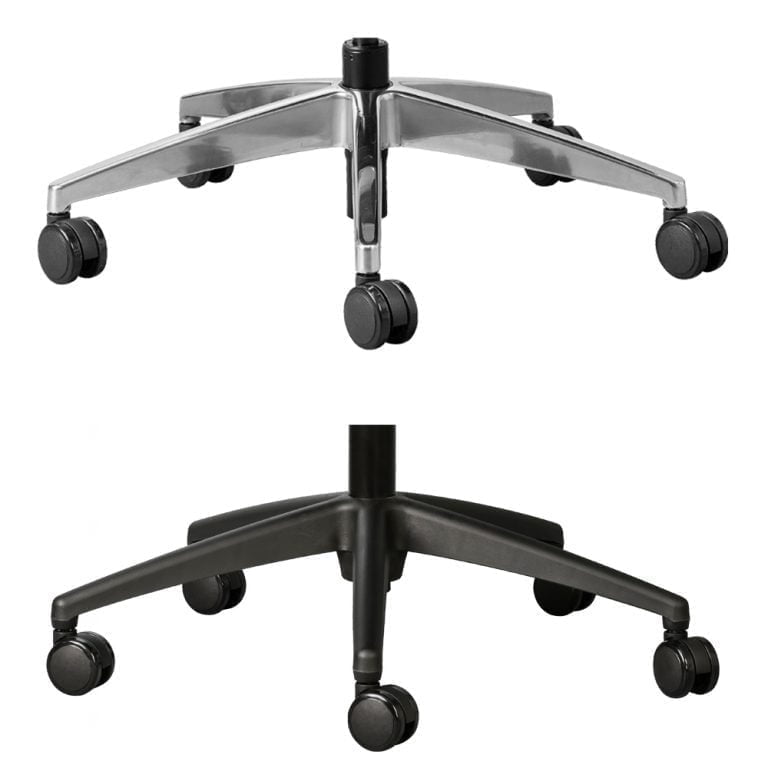
The 5-Star base can be manufactured from aluminium, glass reinforced nylon, or formed steel tubing.
- Aluminium bases have a very high weight carrying capacity and so are often used on heavy duty office chairs.
- Bases made from nylon with glass fibre reinforcing have become extremely popular. With the correct design structure and 30% glass fibre reinforcement, nylon bases are a good choice for heavy duty office chairs. Nylon bases provide excellent strength and are flexible enough to move easily over slightly uneven floors. They are less expensive than their aluminium counterparts.
- Bases made from steel tubing are welded together and have been known to fail along weld lines. Although they can be very strong, the integrity of the base is highly dependent on the quality of the weld. These bases are the least preferred option for heavy duty chairs.
c. The Gas Lifter
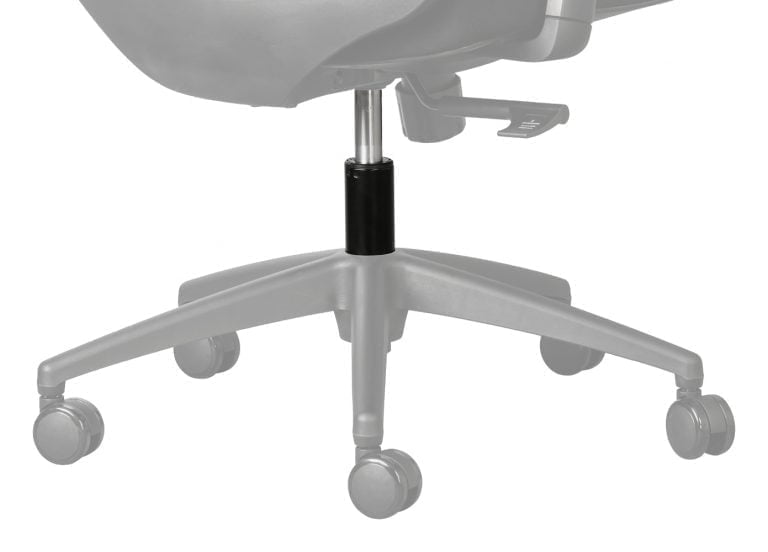
The gas lifter enables you to lift or lower the seat height of the chair. It also acts as a ‘damper’ to cushion the impact when you first sit down.
Gas lifters should be manufactured in accordance with an international design standard, for example DIN EN 16955-2017. If they are, they will carry the applicable mark or logo as well as a Class Rating.
For heavy duty chairs, a Class 4 gas lifter is preferred because it has a higher load rating than the standard Class 3.
1.2. The Mechanism on a Heavy-Duty Orthopedic Chair
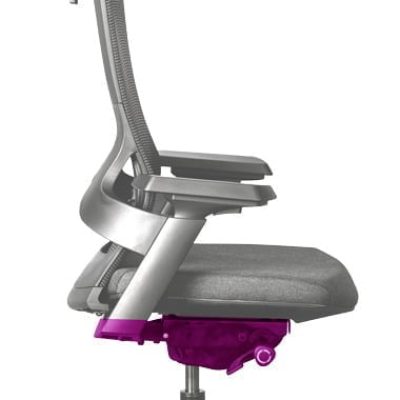
For a heavy duty office chair, the strength of its mechanism is vital. To ensure that the mechanism is suitable for heavy duty use, it should be strength tested by organisations like SABS or BIFMA.
The mechanism enables you to adjust the movement of the seat and backrest. Adjustments include:
- Seat height
- The seat depth (if a seat-slider is fitted)
- Tilt tension
- The angle of the seat and backrest
1.3. The Seat
The chair seat is made up of 3 basic components, namely the seat base, the foam cushion and the upholstery material. Seats for heavy duty chairs need to be strengthened to “carry the load”. Normal or standard office chair seats are not designed for a heavy duty application.
a. The Seat Base
Common materials used for the seat base are plywood, polypropylene or nylon. A seat suitable for a heavy duty chair needs thicker plywood with more laminations for greater strength. For example, the Heathrow has a 12 lamination (18mm), plywood seat shell. Heavy duty seats made from polypropylene or nylon require additional structural webs, or steel reinforcement.
b. The Foam Cushion
Flexible Polyurethane foam is used on nearly all office chair seats, and may be either block cut or moulded. Moulded foam, like that used for a car seat, is more resilient and will last longer. Good quality, high density moulded foam is essential for all heavy duty office chairs.
c. Upholstery Material
Select an upholstery material that suits the operating environment. Polyester, acrylic or nylon weaves are breathable but more difficult to clean than vinyl or leather. What is the best upholstery fabric for office chairs?
1.4. The Backrest on a Heavy-Duty Orthopedic Chair
a. The Support Structure
For any office chair, the backrest support structure is not as heavily stressed as the seat. Upholstered plywood backrests do not normally require additional reinforcement, while polypropylene shells typically have standard web reinforcements. If the chair has a mesh backrest, the supporting frame should be made of aluminium or a good quality, glass fibre reinforced nylon. Other plastics are simply not strong enough for a heavy duty application.
b. Backrest Foam
The foam on upholstered office chair backrests is not highly stressed, even in a heavy duty environment. The use of softer, block cut foam is usually adequate.
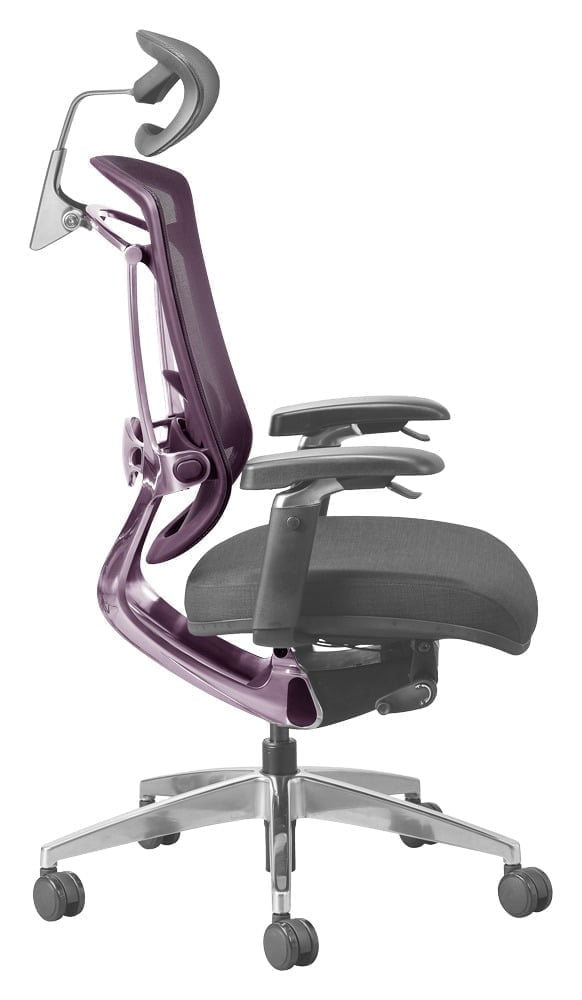
c. Mesh Backrest
A good quality mesh will easily have a lifespan of 10+ years. An inferior mesh quickly becomes “saggy” and no longer provides the correct ergonomic support for your back. Advantages of mesh back chairs.
1.5. The Armrests
Height adjustable armrests are an ergonomic essential for all office chairs used in a 24/7 control room or call centre. What are the best armrests for my office chair?
Depending on the work performed, height adjustable armrests can add to the ergonomic benefit. Some chairs have multi-functional armrests. These are height and width adjustable, and may also allow the arm pads to be moved forwards, backwards and swivel inwards and outwards.
Armrests for Big and Tall executive office chairs should be of a strong construction as they are often used as a support aid to get into and out of the chair. A good example is the Stratos armrest available on the Heathrow.
2. What makes a Heavy Duty Office Chair an Orthopedic one?
Karo’s Free-Float mechanism is the ‘heart’ of all our Orthopedic office chairs. Unlike standard ergonomic chairs, orthopedic chairs have advanced adjustability to reduce spinal pressure and support rehabilitation. Orthopedic chairs are best suited for anyone with pre-existing conditions like chronic lower back pain, or sciatica. What is an orthopedic chair?
The free-float swivel & tilt mechanism gives you total freedom to adjust the backrest and seat of your office chair in a position that best suits your body.
With a free-float office chair mechanism, the angle and height of the backrest, as well as the seat inclination can all be adjusted independently from each other.

Conclusion
24/7 call centers, control rooms, and Big and Tall people need a heavy duty chair. A standard office chair rated to 120kg will usually not be able to ‘carry the load’ and won’t last as long as one would expect. Many people that need a heavy duty chair, also have back ailments, and so require a chair with orthopedic adjustability. There are not many office chairs available that combine both the heavy duty and orthopedic attributes. The Heathrow is a good example of a chair which does and is therefore a heavy duty orthopedic office chair.
By the same author:


How to deal with stress at work
Work stress poses a threat to our health and in turn, to the organisation we work for. How to manage stress at work.

How Much Should You Budget for an Ergonomic Office Chair?
Your chair is more than just a piece of furniture. It is a pivotal tool that can influence your productivity, health, and wellbeing.
How Do I Know If I Need a New Office Chair? The 7 Signs
Wondering if your office chair is failing? Spot the warning signs, and protect your posture, comfort and productivity at work.