

How to Compare Ergonomic Office Chairs Using the Ergonomic Rating System
- Updated:
About the author:

John Karle
“Create Healthy Workspaces”
An ergonomic chair is arguably the most important piece of equipment in any working environment. With so many office chairs available and each claiming to be “ergonomic”, it is important that they can easily be compared using an objective measurement system. The Ergonomic Rating does just that.
The Ergonomic Rating is a scientific scoring system that evaluates six key ergonomic features of an office chair: armrests, chair mechanism, backrest support, headrest, compliance with recognised standards and daily usage capacity. Chairs are rated from 1 to 5 stars, with 5-star chairs offering the highest level of ergonomic adjustability and support.
Ergonomic Rating Comparison Table
A chair with a 5-Star Rating allows you to adjust it to your specific needs. These chairs are ideal for anyone who spends all day at their desk, including long shifts and round-the-clock use.
| Rating | Suitable for | Usage |
|---|---|---|
| 1 Star | Visitor chairs | Occasional |
| 2 Star | Short meetings | 1-2 hours/day |
| 3 Star | Laboratories | 2-3 hours/day |
| 4 Star | Low intensity office use | Up to 6 hours/day |
| 5 Star | Intensive office use | 6+ hours/day |
A Breakdown of Ergonomic Ratings
- 1-Star:
These chairs include visitor chairs that are not adjustable and are only suitable for short-period usage. - 2-Star:
These chairs have only basic ergonomic features like fixed armrests and height adjustment. They are not suitable as task chairs to be used for extended periods. - 3-Star:
Here we include task chairs suitable for workers like nurses and production foremen. These employees usually spend most of their time on their feet, with frequent short periods sitting at a desk or workstation. - 4-Star:
These chairs are suitable for users that spend up to 6 hours a day sitting at their workstation. - 5-Star:
These chairs have all the latest ergonomic features to enable you to adjust the chair to your exact requirements. These chairs are suitable for anyone that spends their entire day sitting at their workstation, including multiple shifts and 24/7 usage.
- 1-Star:
Why Is It Difficult to Compare Office Chairs?
Choosing an office chair can be surprisingly difficult. Hundreds of chairs are available on the market, and many claim to be "ergonomic". However, the term ergonomic is often used loosely and there is no universally accepted standard that determines whether a chair is truly ergonomic.
As a result, two chairs may appear similar at first glance, yet provide vastly different levels of comfort, support and adjustability.
1. Marketing Claims Can Be Misleading
Many office chairs are advertised as ergonomic simply because they include a few adjustable features, such as height adjustment or armrests. However, the presence of these features alone does not guarantee that a chair will provide adequate support during long periods of sitting.
For example, a chair may be marketed as ergonomic but still lack:
- Proper lumbar support
- Adjustable armrests
- Dynamic sitting capability
- Seat depth adjustment
- Sufficient backrest support
Without understanding which features are important, it can be difficult to determine whether a chair is genuinely ergonomic or simply marketed as such.
2. The Term "Ergonomic" Means Different Things to Different Manufacturers
One manufacturer may classify a chair with basic height adjustment as ergonomic, while another may reserve the term for chairs that include advanced features such as synchro mechanisms, adjustable lumbar support and 4D armrests.
This inconsistency makes it difficult for buyers to compare products objectively. This is one of the strongest arguments for having a standardised rating system.
3. Adjustment Features Vary Significantly
The ergonomic performance of a chair depends heavily on its adjustability. Some chairs offer only basic height adjustment, while others allow you to adjust:
- Seat height
- Seat depth
- Backrest and seat angle
- Lumbar support
- Armrest height, width and depth
- Headrest position
The greater the range of adjustment, the easier it is to fit the chair to different body shapes and working styles. Because adjustment features vary so widely between chairs, comparing products based solely on appearance is almost impossible.
4. Build Quality Is Not Always Visible
Two chairs may look almost identical in photographs yet differ substantially in construction quality. Differences may include:
- Mechanism quality
- Frame strength
- Component durability
- Fabric performance
- Weight capacity
- Suitability for intensive use
A chair designed for occasional use may look very similar to one designed for 24/7 control room operation, despite having vastly different performance characteristics. This makes it difficult for buyers to assess long-term value based solely on product images or marketing specifications.
5. Different Users Have Different Requirements
The ideal chair for a receptionist is not necessarily the ideal chair for a call centre operator, control room user or executive. A chair should therefore be assessed not only on its features, but also on its suitability for the intended application.
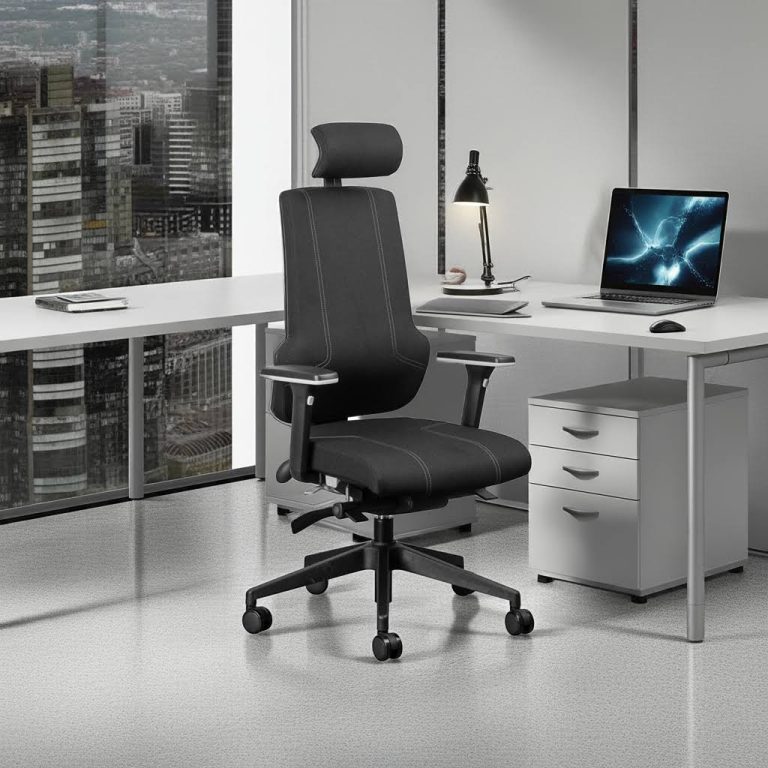
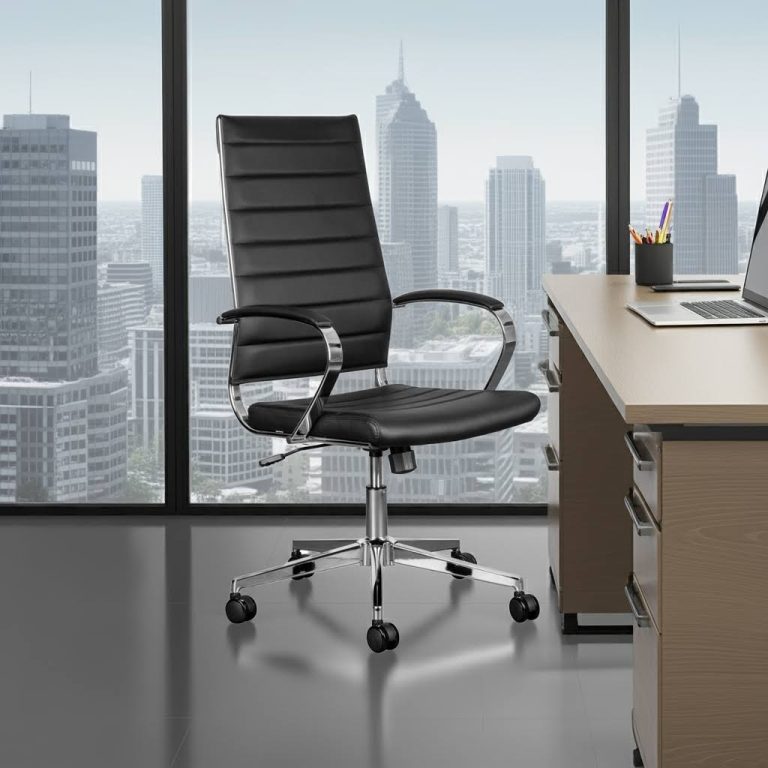
Ergonomic Rating - Examples

Why We Developed the Ergonomic Rating
Because marketing claims, adjustment features, build quality and intended usage can vary significantly between chairs, comparing products objectively can be difficult.
The Ergonomic Rating was developed to provide a simple and consistent way to evaluate office chairs. By assessing six key ergonomic factors, the rating allows users to compare chairs based on their actual ergonomic performance rather than marketing claims alone.
How is the Ergonomic Rating calculated?
The rating is calculated by taking into account the 6 most important features of an office chair. Using a weighted scale, these are added together to determine a final score.
1. Armrests
Chairs with no or fixed armrests receive a lower score, while those with fully adjustable 4D padded armrests receive the highest score in this category. Office chair armrests explained.
2. Chair Mechanism
A chair with a simple height adjustment mechanism receives the lowest category score. At the opposite end of the spectrum are chairs that are fitted with a Synchronous or Free-Float mechanism that allows Dynamic Sitting. The ease of adjustment and additional features like seat depth adjustment are also included in the calculation. What Is The Difference Between Office Chair Mechanisms?
3. Backrest Support
The type of backrest and lumbar support is an extremely important ergonomic feature on any chair. Poor or inadequate backrest support often results in back-related health problems. Chairs with a fully adjustable backrest and/or lumbar support therefore score higher in this category than those with limited or no backrest adjustment. Back Support for an Office Chair: Why It Matters More Than You Think
4. Headrest
The inclusion of a headrest improves the score. Although a headrest is seldom used by an operator when the chair is in an upright position, it can act as a datum for keeping your head upright and not letting your head and neck drop forward. A headrest is ideal when you lean back and recline your chair as it supports your head and neck. Healthy Sitting Position at a Desk: How to Sit Correctly at Work
5. Compliance to International Standards
Compliance to recognised design standards like BIFMA and ErgoMax, is directly related to the spectrum of people that will be able to use the chair, its overall strength, and its suitability to a particular working environment.
6. Usage
Chairs that are designed for limited usage per day receive a lower score than those that are designed for extended or heavy-duty 24/7 use. Office chair comparison guide.
By the same author:


What Is The Difference Between Office Chair Mechanisms?
Office Chair mechanisms are regarded as the “heart” of an office chair. What do they do?
What Is An Ergonomic Chair And How Do I Select My Ideal Seat?
There are many options available, but what is an ergonomic office chair? What features must it have? How do you make the right choice?

Office Furniture Suppliers for Ergonomic Solutions
Choosing the right office furniture suppliers in South Africa is crucial for creating a productive, comfortable, and stylish workspace.