

Heavy Duty Chairs – What you need to know
- Updated:
About the author:

Mike Karle

“Create Healthy Workspaces”
If your office chairs wear out quickly, become uncomfortable after long shifts, or break when being used by bigger people, the problem may not be the brand, it may be that you're using a standard office chair where a heavy-duty chair is required. A genuine heavy-duty office chair is engineered differently. It uses stronger components, higher load-rated mechanisms and more durable materials to withstand greater loads and continuous use. Whether you're buying for a control room operating 24/7 or for someone weighing between 120 and 180kg, choosing the right chair improves safety, comfort and long-term value.
In this guide, you'll learn what defines a heavy-duty office chair, who needs one and the features that genuinely matter.
What is a Heavy-Duty Office Chair?
A heavy-duty office chair is designed for:
- Users in the 120 to 180kg range
- 24/7 workplaces, such as control rooms, emergency services, security operations and call centres, where multiple people use the same chair around the clock.
Unlike a standard office chair, every major component must be capable of handling higher loads and significantly more usage cycles. The most important reinforced components are:
- Base set
- Mechanism
- Seat and backrest
- Armrests
Simply fitting a larger seat or a stronger gas lift does not make a chair heavy duty.
Who needs a Heavy-Duty Office Chair?
A heavy-duty chair is worth considering if you:
- are Big & Tall and weigh more than 120kg
- require a wider seat
- operate a 24/7 control room
- manage a call centre with multiple shifts
- replace worn or broken office chairs frequently.
Using a standard office chair in these environments often results in premature wear, component failure and increased replacement costs.
To make an office chair “stronger” and “more durable”, its overall design needs to take the higher performance requirements into account. Office Chairs for Individuals above 120kg. The correct combination of ALL the individual components that are required to make up the chair is vitally important.
Heavy-Duty Office Chairs for Extreme Use
What makes a genuine heavy-duty office chair?
A heavy-duty chair is only as strong as its weakest component. Manufacturers therefore need to be wholistic and strengthen the entire chair, not just certain parts. The important components include the following:
1. The Base Set
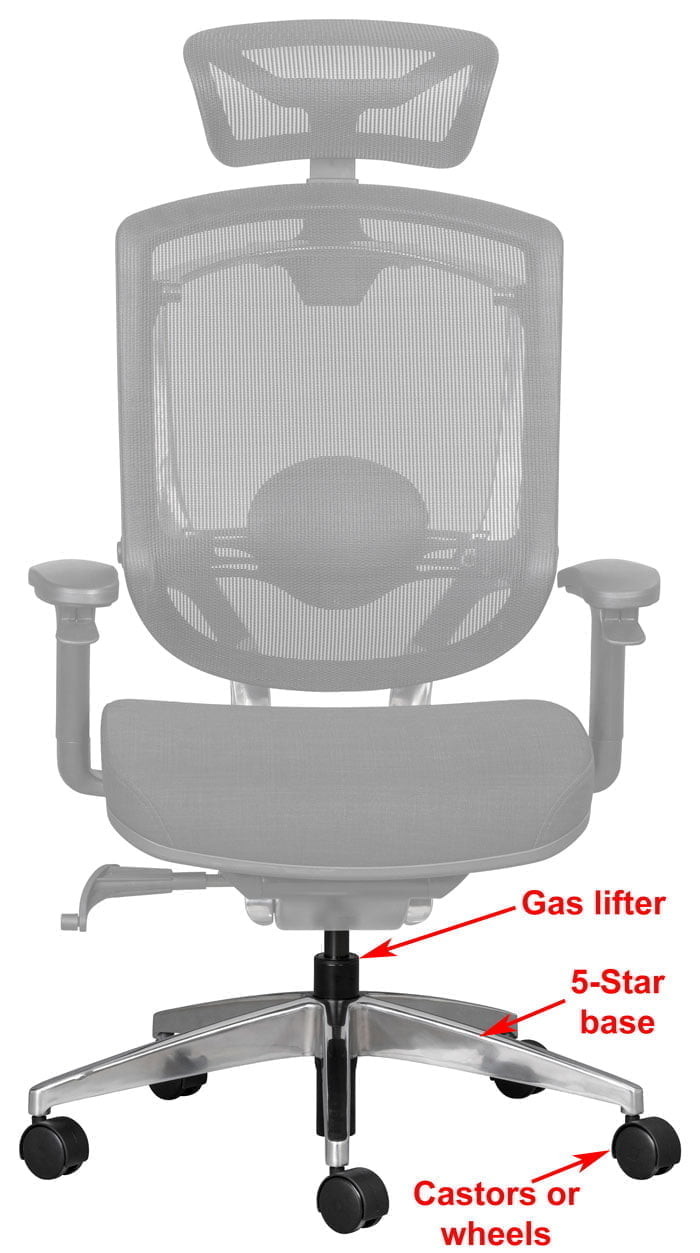
The BASE SET consists of 3 major components, namely:
a. Castors or wheels
For heavy-duty office chairs, larger castors (e.g., 60mm) provide better carrying capacity and maneuverability. Use soft rimmed castors on hard surfaces like tiles to avoid damage, while hard castors are suitable for carpet.
b. The 5-Star base
5-Star bases are typically made either from aluminium or glass reinforced nylon.
- Aluminium bases have a very high weight carrying capacity and can be recycled. For this reason, heavy duty office chairs often have aluminium 5-star bases.
- Bases made from nylon with glass fibre reinforcing have become extremely popular. With the correct design structure, quality nylon, and a 30% glass fibre reinforcement filling, nylon bases are a good choice for heavy duty office chairs. These bases provide excellent strength and are flexible enough to move easily over slightly uneven floors.
c. Gas lifter
Look for a gas lift manufactured to recognised international standards, such as DIN EN 16955, with an appropriate load rating. For heavy-duty applications, a Class 4 gas lift is generally preferred because it offers a higher load capacity than a standard Class 3 unit.
2. The Mechanism on Heavy-Duty office chairs
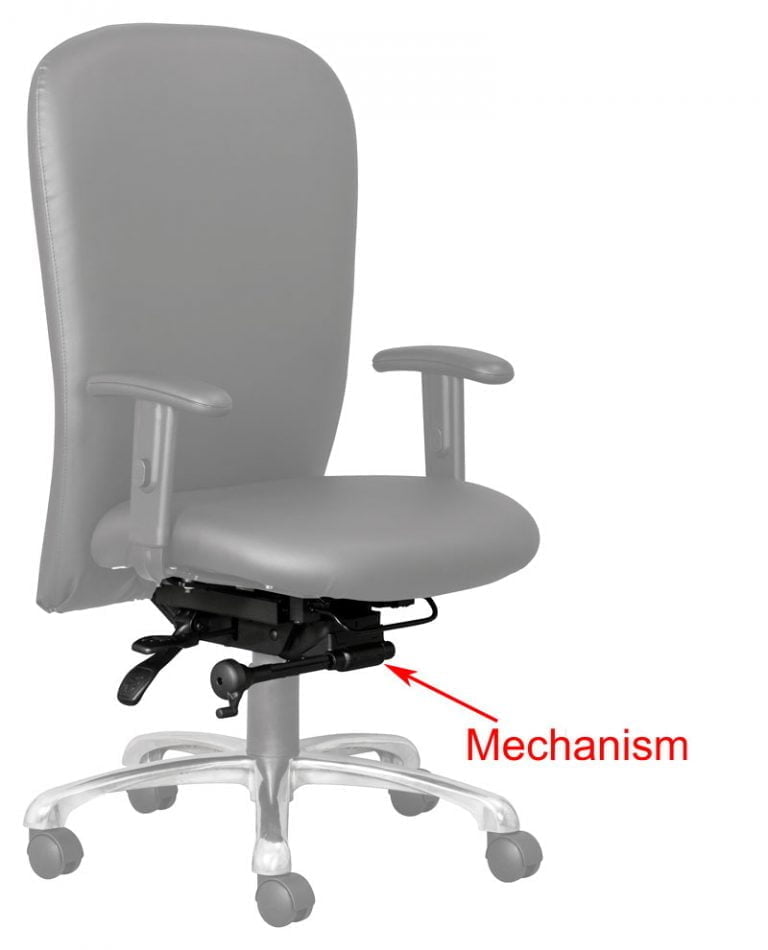
The mechanism enables you to adjust the movement of the seat and backrest. Adjustments include:
- the angle of the seat and backrest
- the depth of the seat Office Chairs with Seat Depth Adjustment.
- the seat height
- the tilt tension.
The strength of the office chair mechanism in a heavy duty environment is vital. To ensure that the mechanism is suitable for heavy duty use, it should be strength tested. Organisations such as SABS or BIFMA will conduct tests in accordance with the relevant Product Performance Standards. The mechanism on the Heathrow chair was tested and certified by SABS.
3. A reinforced seat
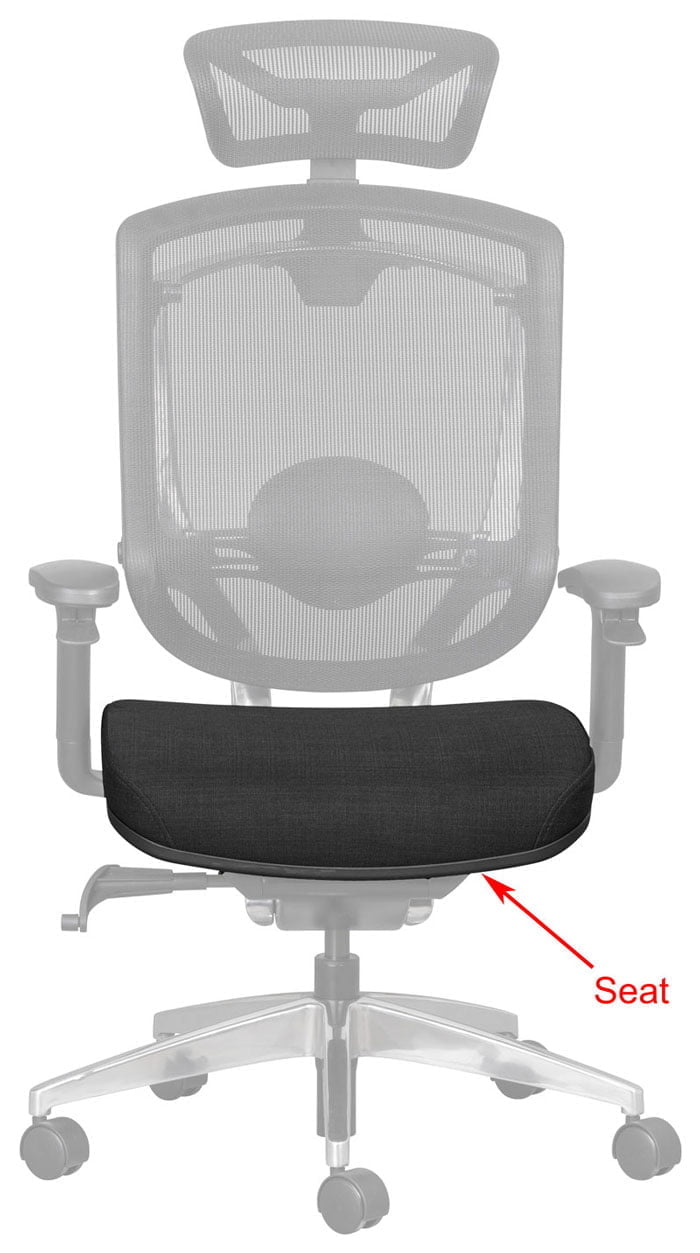
The seat experiences a tremendous amount of loading throughout the chair's life. Three components determine its durability.
a. Seat shell
Seat shells are commonly manufactured from:
- plywood
- polypropylene
- reinforced nylon.
Heavy-duty chairs use thicker plywood with additional laminations or reinforced polymer seat shells designed to resist flexing under higher loads.
b. Foam
Flexible Polyurethane foam is used on all office chair seats, and may be either block cut or moulded. Moulded foam, like that used for a car seat, is more resilient and will last longer. Good quality, high density moulded foam is essential for all heavy duty office chairs. What is the difference between moulded and block-cut foam, and which is best?
c. Upholstery material
Select an upholstery material that suits the operating environment. Polyesther, acrylic or nylon weaves are breathable but more difficult to clean than vinyl or leather. What is the best upholstery fabric for office chairs?
4. A supportive backrest
For any office chair, the backrest support structure is not as heavily stressed as the seat. Upholstered plywood backrests do not normally require additional reinforcement, while polypropylene shells typically have standard web reinforcements. If the chair has a mesh backrest, the supporting frame should be made of a good quality, glass fibre reinforced nylon. Other plastics are simply not strong enough for office chairs used in 24/7 control rooms and call centres.
Remember: A heavy-duty chair should provide more than strength, it should also support a healthy sitting posture. For shared workstations operating 24/7, a fully adjustable office chair is essential.
5. Armrests for Heavy-Duty office chairs
Height adjustable armrests are an ergonomic essential for all office chairs used in a 24/7 control room or call centre.
Depending on the work performed, height adjustable armrests can add to the ergonomic benefit. Some chairs have multi-functional armrests. These are height and width adjustable, and also allow the arm pads to be moved forwards, backwards and even swivel inwards and outwards. Armrests for Big and Tall executive office chairs should be strengthened as they are often used to assist the user to get into and out of the chair.
Conclusion
A genuine heavy-duty office chair is far more than a stronger office chair. It is a complete seating system engineered to withstand higher loads, longer operating hours and years of continuous use. Whether you're purchasing for a big and tall user or outfitting a 24/7 control room, pay close attention to the chair's base, mechanism, seat construction, armrests and independent testing. These components determine how well the chair will perform over time.
Choosing a chair built specifically for heavy-duty use not only improves comfort and safety but also reduces maintenance costs and extends the life of your investment.
Heavy-Duty Office Chairs
By the same author:

Why Office Chair Seats Should Include Moulded Polyurethane Foam
For greater comfort and durability, good quality office chairs should have seats manufactured with moulded polyurethane foam.
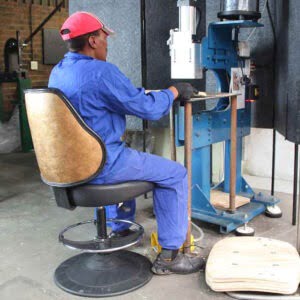
Why Every Production Line Needs the Right Industrial Chair
Invest in the right industrial chair to boost productivity, reduce injuries, and support factory workers on your production line.

Why Automated Fabric Cutting improves quality
High quality office and casino seating requires advanced automation, like automated fabric cutting.