

Heavy-Duty Laboratory Chairs and Stools
- Updated:
About the author:

John Karle

“Create Healthy Workspaces”
Laboratory chairs and stools are designed for environments that standard office chairs simply cannot handle. Whether you're outfitting a hospital laboratory, research facility, school, university, pharmaceutical company or electronics workshop, choosing the right seating improves comfort, supports productivity and extends the life of your investment. A laboratory is often a hygienic environment and seating must withstand frequent cleaning, support higher work surfaces and, in many cases, operate reliably in a demanding 24/7 environment. Because they are subjected to heavy duty use, lab stools are often strengthened and made from easily cleaned materials. Laboratory chairs in South Africa differ markedly in price, so selecting the right one for your application is important. To reduce the risks commonly attributed to long periods of sitting, a laboratory chair should include ergonomic design principles.
In this guide, you'll learn what makes a laboratory chair heavy-duty, the key features to consider and how to choose the right model for your application.
What is a heavy-duty laboratory chair?
A heavy-duty laboratory chair is built for demanding environments where standard office chairs would wear out quickly. They typically feature strengthened frames, durable seating materials and components designed to withstand continuous daily use.
Heavy-duty laboratory chairs are commonly used in:
- Hospital and pathology laboratories
- Research laboratories
- Pharmaceutical manufacturing
- Quality control laboratories
- Food testing facilities
- School and university laboratories
- Industrial laboratories
- Electronics and cleanroom environments.
Many laboratories operate around the clock, meaning chairs may be used by multiple people across several shifts. In these situations, investing in a good ergonomic laboratory chair reduces maintenance costs and provides greater long-term value.
Laboratory chair or stool?
The right choice depends largely on the height of your work surface and the nature of the work being performed.
A laboratory chair is generally the better option when staff spend long periods seated performing detailed tasks such as microscope work, sample preparation or analysis. The backrest provides essential lumbar support, helping reduce fatigue during extended sitting.
A laboratory stool is often more suitable where workers frequently move between benches or only sit for short periods. Stools provide greater freedom of movement while occupying less space.
Many laboratories use both, depending on the workstation.
Key factors when selecting chairs for laboratory use
Apart from special hygiene features, laboratory chairs should take up little space while still offering good ergonomics and seating comfort. In South Africa, there are a wide variety of lab chairs available at various price points. Before selecting a chair, you should consider the following:
1. Hours usage per day
The first question is how long the chair will be used each day.
For occasional use, such as school or university teaching laboratories where sessions typically last one or two hours, a simple fixed-height stool may be perfectly adequate. For research laboratories, hospitals and commercial facilities where staff remain seated for extended periods, an ergonomic laboratory chair with multiple adjustments provides significantly better support. Where chairs operate continuously across multiple shifts, choose a heavy-duty model specifically designed for intensive use.
2. Height of the working surface
Laboratory benches are often much higher than standard office desks. If the working surface is elevated, the chair should include:
- Height adjustment suitable for laboratory benches
- A stable footring
- A large, stable base
A properly positioned footring allows users to support their feet comfortably while maintaining good circulation and posture. When selecting a chair, pay attention to the footring design. Some inexpensive models use clamp-on footrings that can loosen over time and rotate around the gas lift. A bolted construction like Karo's NUGEN footring provides greater stability and durability. What is the correct height for my chair?
3. Maneuverability
Laboratories usually have hard floors and not carpets. Chairs fitted with castors, or wheels, are often necessary to allow you to easily move into position. Soft or rubber-rimmed castors are better for a hard floor as they ensure the chair will move easily over the surface.
In a teaching laboratory like a school or university, tasks are usually short (1-2 hours). In these laboratories, 4-legged stools or ones with glides (not castors), are common.
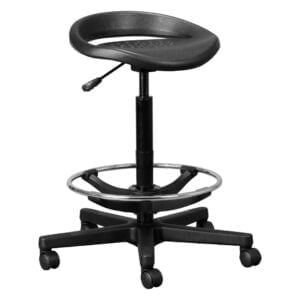
Karo’s NUGEN footring
The NUGEN footring is bolted to a specially-made lower column and cannot come loose and rotate around the gas lifter.
The NUGEN is a price competitive footring available for laboratory chairs in South Africa.
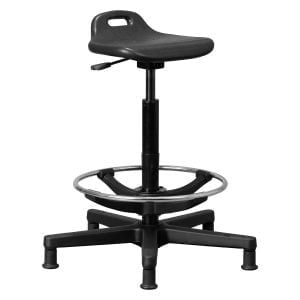
4. Environment is key for heavy duty lab stools
Most laboratories operate in a hygienic environment. Chairs must be easily cleaned and disinfected. Because it is non-porous and easily wiped down, vinyl upholstery is better than fabric. Beware of using alcohol-based cleaners on vinyl as they typically destroy the plasticiser in the vinyl making it hard and brittle.
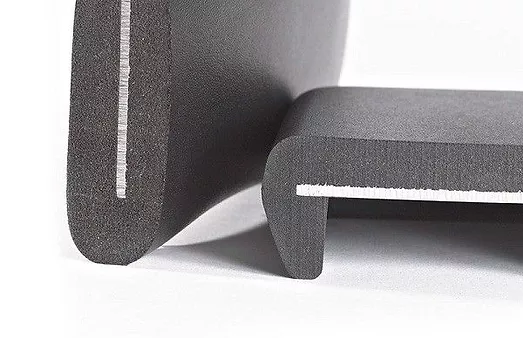
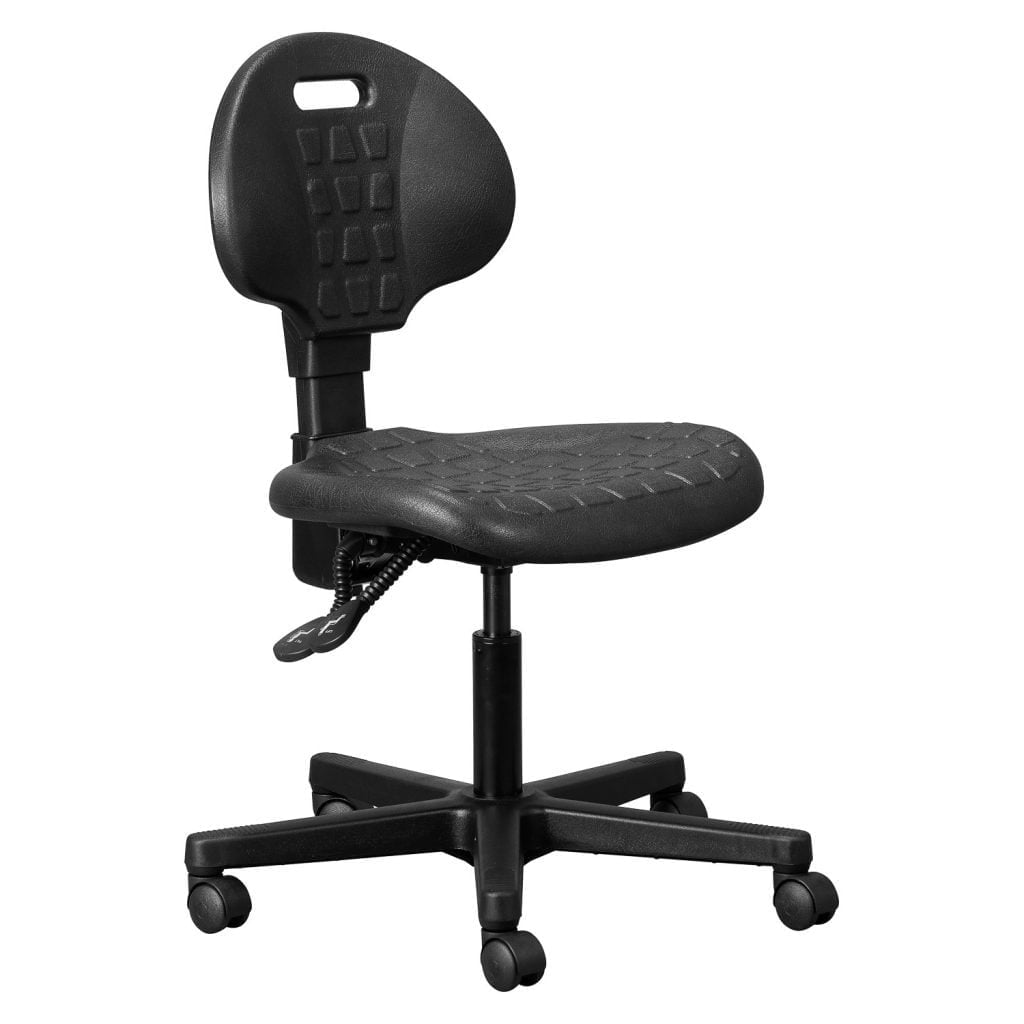
For heavy duty labs, chairs and stools should be covered with self-skinning polyurethane (PU) foam. PU foam is created using a two-part polyurethane process. This creates a lightweight flexible foam core which is encased in a thick outer protective “skin” that is extremely durable and easy to clean.
5. Ergonomic support
Many laboratory tasks involve maintaining the same posture for long periods. Microscope work, pipetting, specimen preparation and analytical testing all place significant strain on the neck, shoulders and lower back. An ergonomic laboratory chair should provide:
- Adjustable seat height
- Adjustable backrest height
- Lumbar support
- Stable movement
- Smooth adjustment controls.
An ergonomically setup laboratory may reduce the risk of musculoskeletal disorders associated with prolonged sitting.
PU chairs are widely used in medical, industrial and manufacturing environments as they are resistant to:
- Chemicals
- Oils
- Grease
- Moisture
They are exceptionally durable and can withstand frequent cleaning without deteriorating, making them ideal for demanding laboratory applications.
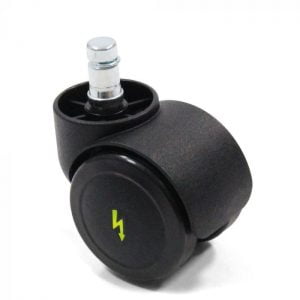
6. Electronics laboratories require ESD chairs
Electronics laboratories present a unique challenge. Static electricity can damage sensitive electronic components, making standard laboratory chairs unsuitable. Electrostatic dissipative (ESD) chairs safely conduct static electricity away from the user through conductive upholstery and specialised castors.
If your laboratory manufactures or repairs electronic equipment, selecting certified ESD seating is essential.
Heavy Duty Lab Stools and Chairs
7. Cost of heavy duty laboratory chairs
As in any country, the price of laboratory chairs in South Africa will play a role in the selection process. However, this should not be the only criteria. A lab chair that is adjustable and provides good ergonomic support will reduce the risk of back pain and other ailments. In a 24/7 laboratory, a heavy-duty chair or stool is essential as you want it to last.
Choosing the right laboratory seating
The best laboratory chair is the one that matches your environment, work processes and daily usage. Before making your decision, consider:
- How many hours the chair will be used each day
- The height of your laboratory benches
- Hygiene requirements
- Whether ESD protection is needed
- The level of ergonomic adjustment required
- Expected durability
Selecting the right laboratory chair isn't simply about finding the lowest price—it's about matching the chair to your environment, your staff and the way your laboratory operates. The right seating can improve comfort, reduce fatigue and provide years of reliable service. If you're unsure which laboratory chair or stool best suits your application, our ergonomic specialists can help you choose the right solution.
By the same author:


How to Compare Ergonomic Office Chairs Using the Ergonomic Rating System
The Ergonomic Rating is a scientific evaluation system that objectively rates the ergonomic features of a chair on a 1 to 5 scale.
How to Choose the Best Office Chair: 6 Questions to Ask Before You Buy
Trying to choose an office chair for yourself can be confusing. Let us make the process a whole lot simpler.

Ergonomic Chair Setup Guide: 8 Mistakes To Avoid
Revamp your workspace with a new ergonomic chair! Check out these 8 setup tips for a smooth and healthy experience.