
Dynamic Sitting Explained – Why Office Chairs Must Move

Office chairs fitted with either a Free-Float or Synchronous mechanism encourage Dynamic Sitting which is crucial for improved ergonomic comfort.

About the author:

Dynamic sitting occurs in an office chair that is fitted with a mechanism that allows the angle between the backrest and seat to change.

What is Dynamic Sitting?

    • Dynamic Sitting occurs when you continuously change the angle between your back and thighs when you sit, or in other words, the angle between the seat and backrest on your office chair.
      • By doing so, you automatically stimulate, or activate various muscles in your lower back, core and legs.
      • As a result, the blood flow through these muscles increases, bringing oxygen and other nutrients to the muscles and carrying away the waste products of muscle metabolism.
      • This action reduces muscle fatigue and its associated pain, particularly in the lower back, core and legs.
    • Dynamic Sitting has long been acknowledged as the global benchmark for ergonomic comfort.

Office chairs fitted with either a Synchronous (synchro) or a Free-Float mechanism, encourage or aid Dynamic Sitting.

How Does a Chair Mechanism Promote Dynamic Sitting?

1. Synchronous Mechanism

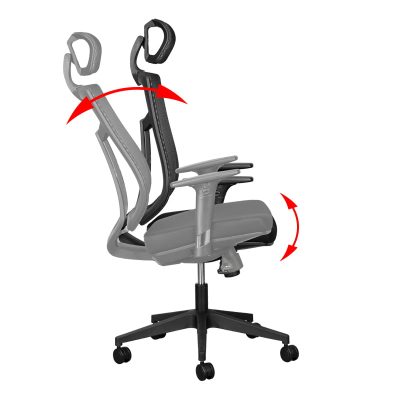
Synchronous or Synchro mechanisms are mechanical swivel & tilt devices that allow the angle of the chair backrest and seat to change in a fixed ratio

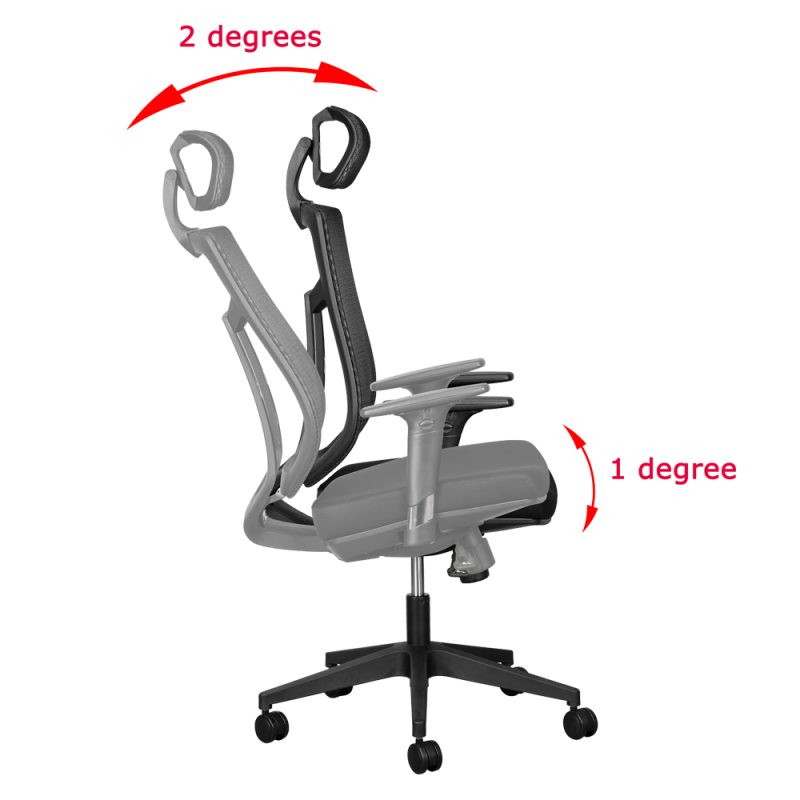
    • A synchro mechanism ensures that the movement of the backrest is always greater than that of the seat.
    • Most synchro mechanisms have a 2:1 ratio. This means that the backrest will tilt backwards by 20 for every 10 of seat tilt.
    • This ratio is fixed and cannot be altered.

When the mechanism is unlocked, the chair is dynamic and the backrest provides continual back support by moving with you and simultaneously changing the angle between the backrest and seat. This movement is called Dynamic Sitting.

When do you need a Synchro Mechanism?

    • Synchro mechanisms are fitted on most of our Ergonomic Office Chairs
    • Ergonomic chairs with a synchro mechanism are general-purpose solutions that promote good posture and prevent discomfort.
synchro mechanism and dynamic sitting
With a synchro mechanism, the movement of the seat and backrest are linked. For every 1 degree that the seat angle changes, the backrest angle will change by 2 degrees

2. Free-Float Mechanism 

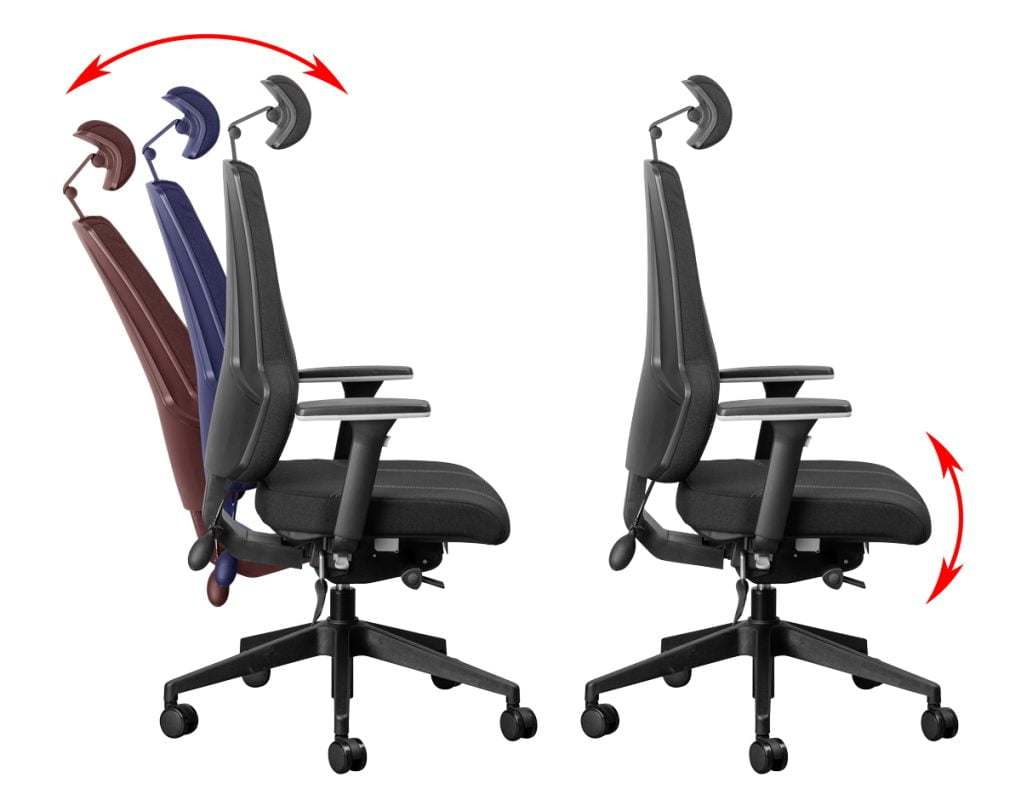
Unlike a Synchro mechanism where the backrest and seat move in a fixed 2:1 ratio, a Free-Float mechanism allows you to independently, or separately, adjust the seat and backrest angles of the chair. 

A Free-Float mechanism lets you adjust the seat and backrest angles independently, so you can set a sitting position that suits you.
This ensures greater adjustment flexibility and more precise posture control.

Like a synchro mechanism, if the Free-Float mechanism is unlocked, the chair is dynamic and the backrest provides continual back support as it moves with you.

When do you need a Free-Float Mechanism?

    • All orthopedic office chairs use a Free-Float mechanism.
    • Because they offer greater adjustment flexibility, orthopedic chairs are best suited for anyone with pre-existing conditions like chronic lower back pain, or sciatica.
free-float mechanism
With a Free-Float mechanism, there is no link between the seat and backrest movement. This allows you to adjust the seat and backrest angles separately

By the same author: