
Breaking Back – What actually happens when you sit?

The anatomy of sitting and how it can cause headaches, shoulder, back and neck pain.

About the author:

how slouching impacts your body

“Create Healthy Workspaces”

Have you ever thought about what happens to your body when you sit for too long? It’s clear that many of us spend a lot of time sitting. According to Professor Philippe Gradidge from Wits University, a study found that office workers can sit for up to 12 hours a day. Most office workers are seated at their desks about 70 percent of the time, while those in jobs like telemarketing can sit almost all day. So, what happens to your body from sitting too much?

1. THE ANATOMY OF SITTING

When you sit there is an interaction between various body elements, broadly classified as skeletal and soft-tissue elements. The spinal column, consisting of the vertebrae and intervertebral discs, together with the pelvis, are the primary skeletal structures that have a significant impact on your comfort and wellbeing when you sit.

Prolonged sitting and back pain

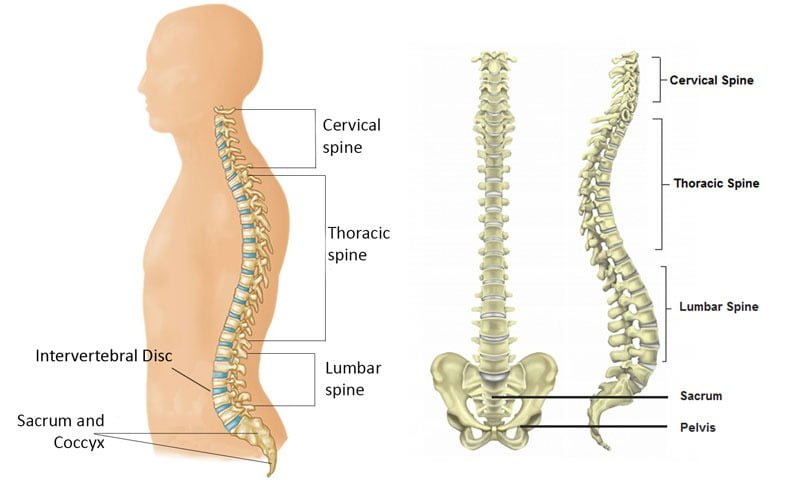
anatomy of the spine and sitting
The Structure of the Spine

1.1 Spinal Vertebrae

The 24 bones in the spine, or spinal column, are important for supporting our body when we sit. They also protect the fragile spinal cord that runs through the vertebral canal.

  • At the top of the spine, in the cervical region (neck), there are seven vertebrae that create a gentle forward curve called a lordosis.
  • This curve helps balance the head’s weight and adds flexibility.
  • In the thoracic region (mid-back), there are 12 vertebrae that form a slight outward curve known as kyphosis.
  • The thoracic vertebrae are also where the ribs attach, protecting vital organs like the heart and lungs.
  • At the bottom of the spine, in the lumbar region (lower back), there are 5 vertebrae that help create another gentle forward curve, forming a lordosis.
  • These curves together help the spine distribute the body’s weight evenly and maintain balance.
lordosis and kyphosis curvature in back
Lordosis and Kyphosis curvature in the spine

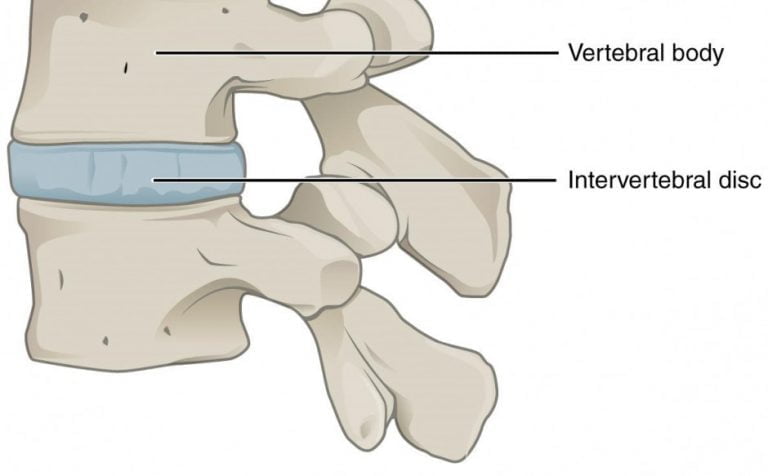
1.2 Intervertebral Discs

Intervertebral discs are important for keeping the spine flexible and comfortable.

  • These discs act like strong cushions and are made of tough cartilage with a thick, jelly-like core.
  • Located between each vertebra, they provide support and absorb shock, making it easy for the spine to bend and twist.
  • They also help evenly spread pressure along the spine, reducing wear on the vertebrae.
  • These amazing structures play a key role in the health and function of the spine.

2. WHAT HAPPENS TO THE BODY WHEN YOU SIT?

  • When we sit with our thighs at a 900 angle to our back, two key movements happen in our skeleton.
  • First, the long thigh bones (femurs) turn in their sockets by about 600.
  • Then, the ligaments connecting the femurs to the pelvis pull gently on the back of the pelvis.
  • This causes it to tilt back by the remaining 300.
  • This tilt of the pelvis changes the natural curve of the lower back from lordosis to kyphosis.
  • Most of this change to a kyphosis curve happens in the first three or four vertebrae above the pelvis.
what happens when you sit and kyphosis in lumbar spine
What happens when you sit? The kyphosis curve pushes the front edges of the vertebrae together, increasing pressure on the front parts of the intervertebral discs.

During this process, the front edges of the vertebrae move closer together while the back edges move a bit further apart. This increases pressure on the front parts of the intervertebral discs.

  • Sitting with a flat lower back or hunch can put two to three times more pressure on the discs in your back than sitting with a healthy lower back curve. In severe cases, this extra pressure can cause a herniated or slipped disc.
  • Sitting improperly makes you unsteady, causing you to shift and rock slightly on your sitting bones.
  • At the same time, the skin and muscles beneath these bones get pressed down, and the large buttock muscles (glutes) slide to one side, resting the sitting bones on a cushion of fat and skin.
  • This limits blood flow to the intervertebral discs.
lower back pain and herniated disc
Herniated or slipped disc

2.1 Embracing Dynamic Sitting

As we spend more time at the computer, we often sit upright or lean forward about 75% of the time instead of reclining.

  • Research shows that using a chair that allows for a reclined position, thereby increasing the angle between the seat and backrest, can help reduce pelvic rotation.
  • This type of chair encourages regular shifts in sitting positions, lowering the risk of discomfort and stiffness from prolonged sitting. This is known as Dynamic Sitting
  • This results in less pressure on the discs and better muscle use in the lower back.
  • Dynamic Sitting promotes movement and different postures to support spinal health and overall wellbeing.

A chair with a synchronous swivel and tilt mechanism promotes Dynamic Sitting which minimises the negative effects of sitting for long periods.

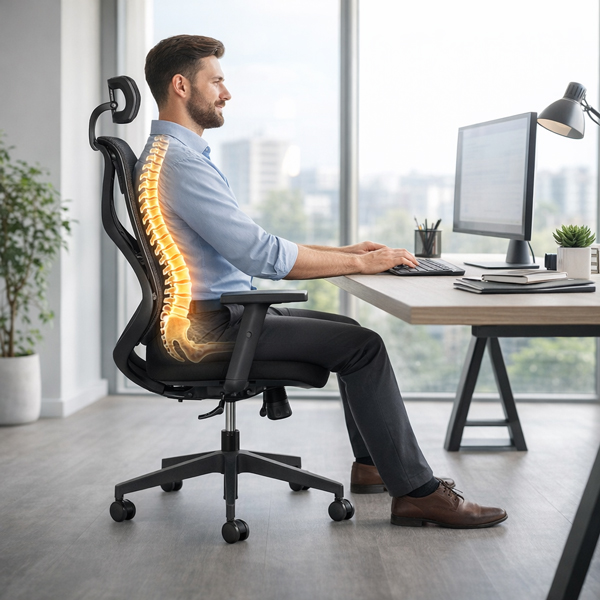
why an office chair must have good back support
Increasing the angle between the seat and backrest reduces pelvic rotation and promotes blood flow in the lower back, core, and legs.

2.2 Good Posture and Lumbar Support

  • Good posture balances body weight on your skeletal structure, reducing muscle workload and enhancing blood circulation.
  • This lessens diaphragm pressure, improving breathing and reducing fatigue.
  • A chair with proper lumbar support maintains the lordosis curve in the lumbar region, allowing lower back muscles to relax and preventing slumping while sitting.
  • If the backrest can tilt for Dynamic Sitting, it reduces pressure on the discs, enhancing blood flow and relieving lower back strain. At Karo, we offer a variety of ergonomic and orthopedic chairs to support this posture.

    Sitting creates stress on the body, primarily affecting the discs and straining the lower back.

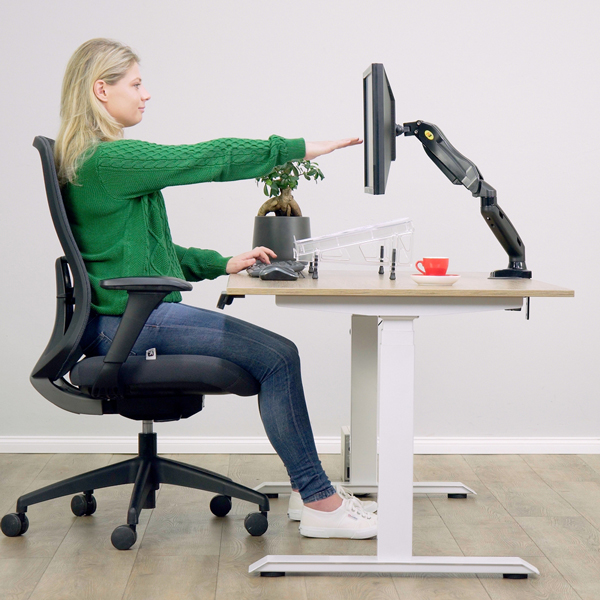
ergonomic workplace risk assessment - correct sitting position
Ergonomic sitting posture

2.3 Reducing Sitting Time at Work

Prolonged sitting increases the risk of back issues. Alternating between sitting and standing can significantly reduce back, neck, and shoulder pain. Using a standing desk allows for an easy transition between postures. 7 Benefits of using a Sit-Stand Desk.

Conclusion

Sitting for long periods can harm our health, causing discomfort and possible long-term problems. To reduce these effects, it’s a good idea to invest in a comfy and supportive ergonomic or orthopedic office chair. This simple change to your workspace can significantly improve your well-being and productivity. Choosing a chair designed for good posture and lower back pain relief can really enhance your daily work experience.

By the same author: