

Kneeling Chair: Pros, Cons and Whether It Actually Works
- Updated:
About the author:
Achim Roetger
“Create Healthy Workspaces”
If your lower back hurts after sitting all day, your chair is likely the problem. Most office chairs force your body into a 90° sitting position. This flattens your natural lower back curve, increases disc pressure, and leads to pain. A kneeling chair offers a different approach. It changes how your body sits, helping your spine return to a more natural S-Shape position. However, it only works if you understand how to use it correctly.
To help you decide whether a Kneeling Chair is right for you, in this article we will discuss:
1. What Happens to Your Body When You Sit on a Conventional Chair?
When you sit in a traditional manner with your thighs at a 90-degree angle to your back, your body undergoes significant changes.
Thigh Bone Rotation and Pelvis Adjustment
- As you start to sit, your thigh bones (femurs) rotate in their pelvic sockets but not enough to match a 90° sitting angle
- Your thighs only rotate by about 60°.
- The remaining 30° required to make up the 90° sitting posture, is achieved by the pelvis rotating backwards and flattening the lumbar curve
- This changes the shape of the lower back from its natural inward S-Shape curve to an outward C-Shape curve.
- This shift occurs mostly in the first three or four lumbar vertebrae.
- As this happens, the front edges of the vertebrae squeeze closer together, while the back edges spread further apart.
- This increases the pressure on the front portions of the intervertebral discs.
- Over time, this leads to discomfort, fatigue, and often chronic lower back pain.
- Breaking Back – What actually happens when you sit?


2. What a Kneeling Chair Changes
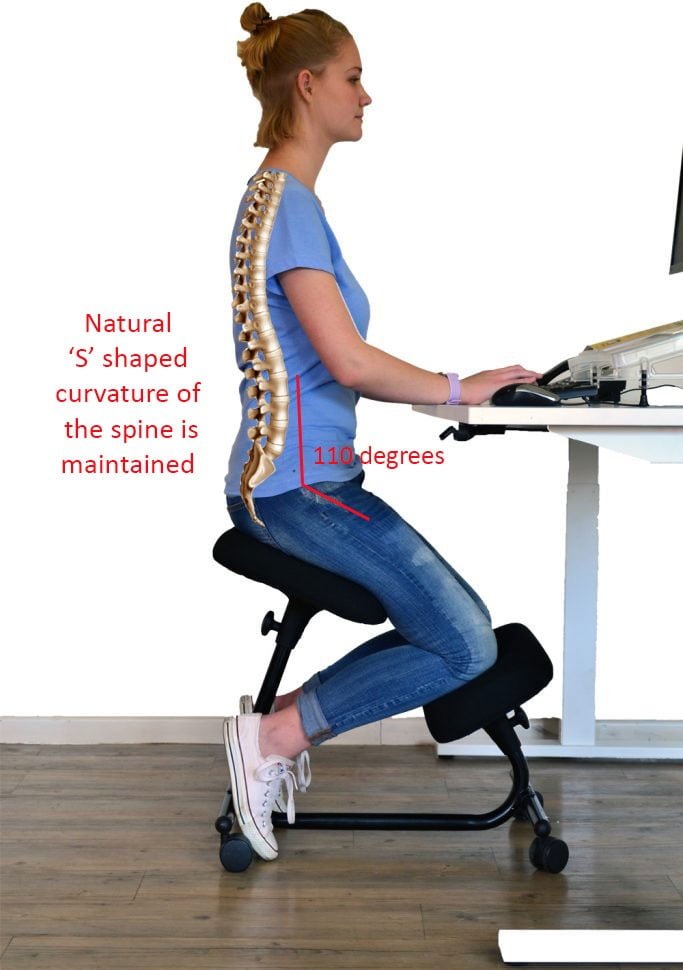
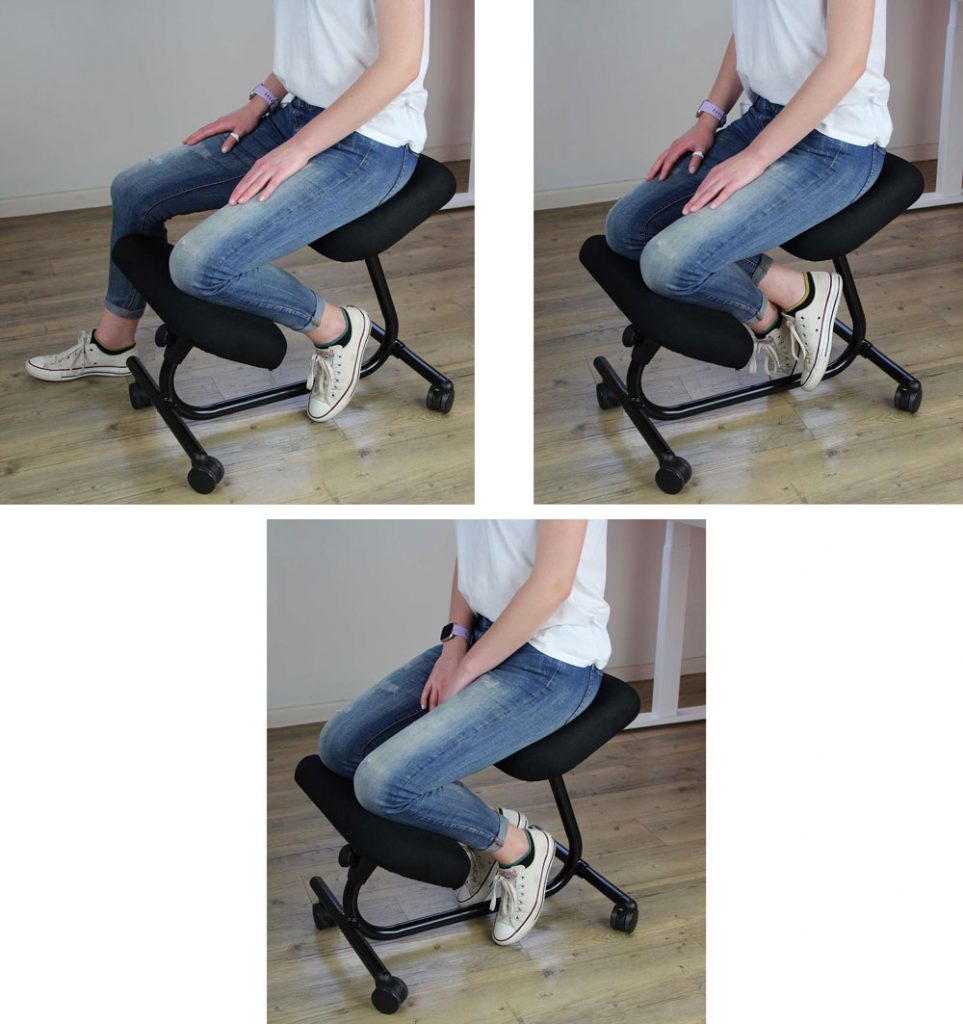
A kneeling chair changes your sitting position completely. Instead of sitting with a back-thigh angle of 90°, a kneeling chair ‘opens’ up the pelvis so that back-thigh angle is between 100–110°. This keeps your spine in a more natural position.
The name “kneeling chair” might sound like your knees take most of your weight, but that’s not true. Here’s what actually happens:
- Around 80% of your body weight stays on your seat
- The remaining 20% is supported by your shins
- This “open” posture helps your spine return to its natural S-Shape curve.
The result: less pressure on your lower back and better overall alignment.

By opening the pelvis to create a 1100 back-thigh angle, the disc pressure in the lumbar region of the spine is reduced by up to 65% compared to the traditional 900 sitting position.
3. The Wellback Kneeling Chair
If you want the benefits of a kneeling chair, the design matters. The Wellback, developed by Karo in 1986, is built to maintain the correct posture consistently. Trusted by thousands of users and regarded at the “benchmark” posture chair in South Africa.
- Steel frame with 60mm nylon castors for greater manoeuvrability.
- Fully adjustable pads.
- Automotive grade moulded foam seat and knee pads.
- Lightweight construction (8kg).
4. The PROS and CONS of a Kneeling Chair
The PROS
Better Back-Thigh Angle
Kneeling chairs create a 110-degree angle between your back and thighs, compared to the 90-degree angle in traditional chairs.
Reduces Lower Back Pain
With an improved posture, kneeling chairs help reduce lower back pain.
Reduces abdominal compression
Reducing compression on internal organs and abdominal muscles makes breathing easier and digestion better.
Strengthens Core
Without a backrest, your core and back muscles are more engaged, strengthening your core.
Improves Circulation
Engaged core muscles improve blood circulation, delivering more nutrients and oxygen to your brain and body, making you feel more energised.
Improved Concentration
Better blood flow to the brain helps improve concentration.
The CONS
Limited Support
Kneeling chairs mainly improve lower back posture.
Restricted Leg Movement and Initial Discomfort
These chairs support your knees and/or shins on a pad, which can limit leg movement. It may take a few days to get used to sitting in this position.
Higher Sitting Position
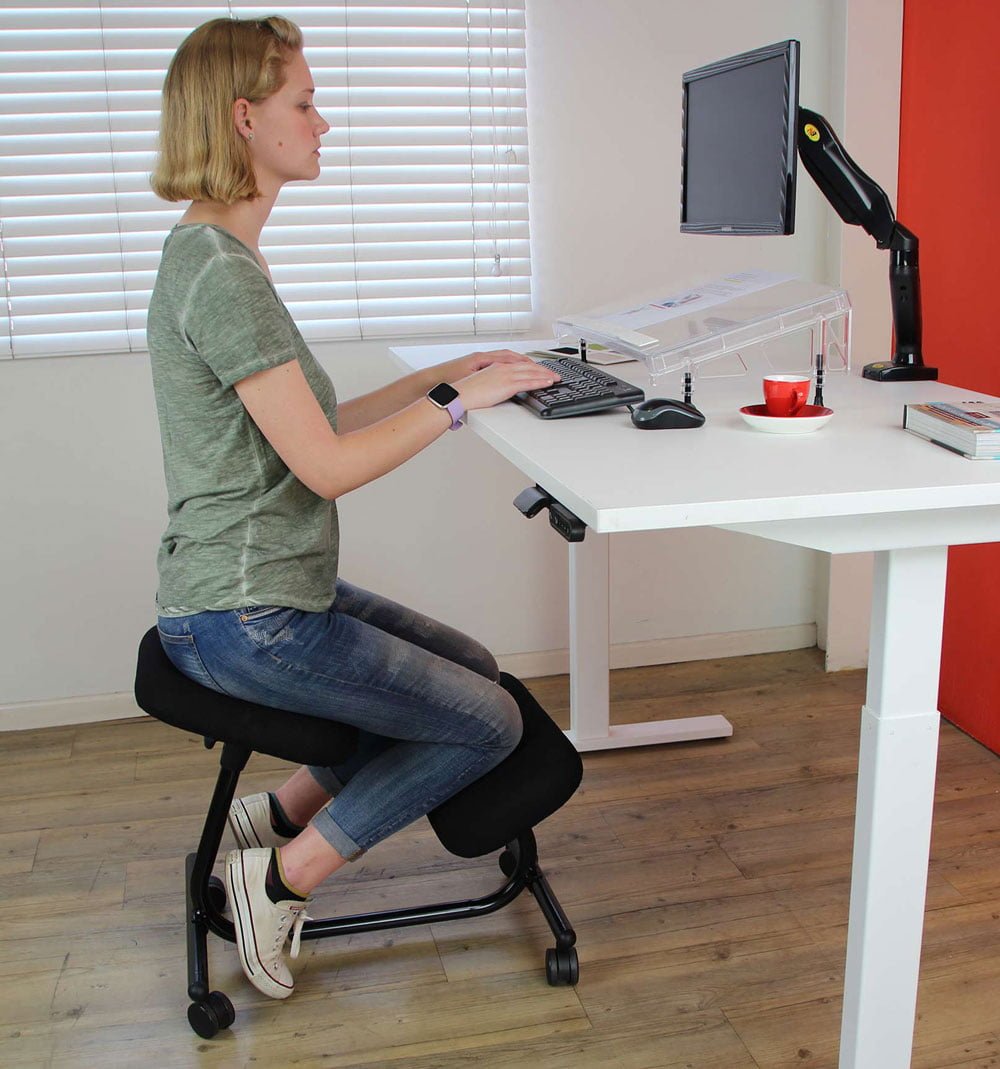
Kneeling chairs position you higher than conventional chairs. You may need to raise your working surface.
Circulation to the Lower Legs
Kneeling chairs may restrict leg circulation. If you have circulation problems, seek professional advice before using one.
Getting In and Out
Some kneelers have a scissor-type design, making them hard to sit on and get up from.
5. Getting Comfortable with a Kneeling Chair: Tips for New Users
Sitting on an office chair and a kneeling chair are two quite different experiences. Your body needs time to adjust. This is normal and most users adapt within a few days as their core muscles strengthen.
a. Vary your position on the kneeling chair
When Peter Opsvik designed the original Balans ergonomic kneeling chair in 1979, he focused on promoting movement and variation. Opsvik understood that staying in the same position for too long is harmful to your body. You need to move.
With a kneeling chair, there is no one “correct” sitting posture.
- Change your position often. Staying in the same spot can quickly lead to tiredness and muscle pain.
- When you first sit down, start by sitting on the seat before going into the kneeling position.
- Most of your weight (about 80%) should rest on your buttocks, while the rest (around 20%) should be on your shins.

b. Ensure the work surface height is correct
The height of your chair with respect to your working surface is the foundation of good posture.


Irrespective of whether you are sitting on a conventional office chair or a kneeling chair:
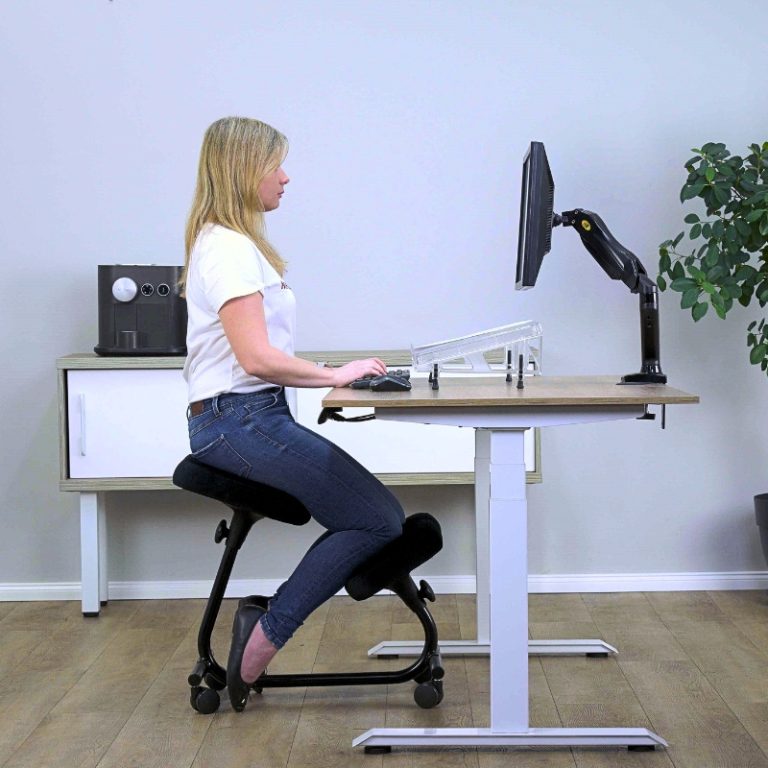
Your work surface is at the correct height when the angle of the elbows is approximately 90 degrees.
Your forearms should be in line with the top of your working surface and your palms should be resting flat on the table.
What is the correct ergonomic height for my desk, computer monitor and office chair?

c. Adjusting Your Kneeling Chair for Optimal Comfort
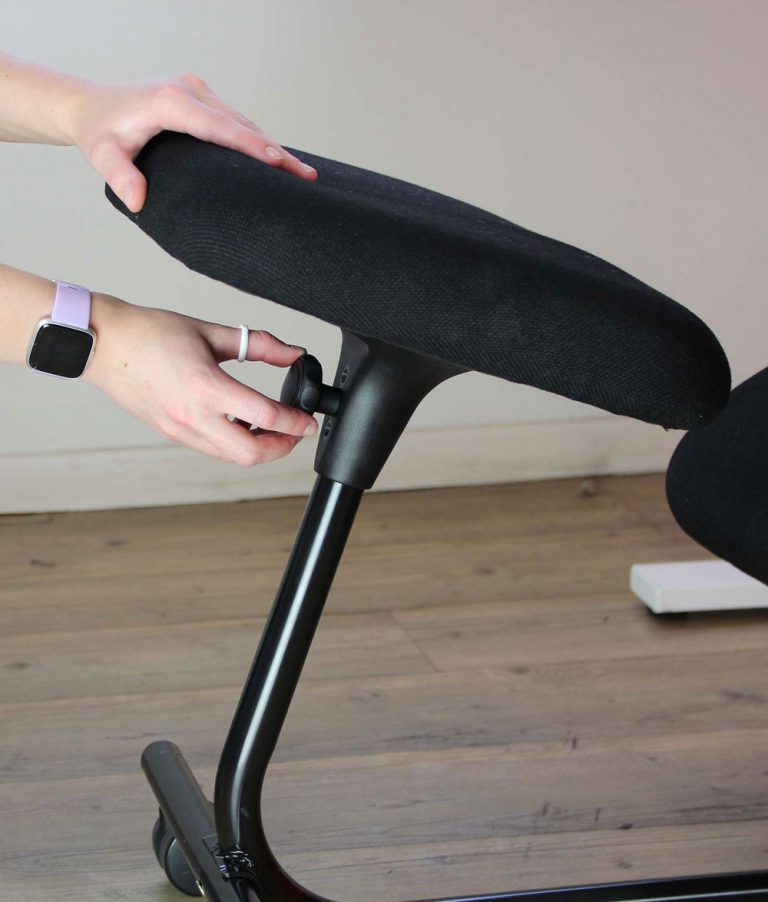
To achieve the correct height between you and your working surface, start by adjusting the seat pad. Once the seat height is correct, adjust the kneepad to a comfortable position.
It’s crucial to choose a kneeling chair with independent seat and kneepad adjustment, as many models sold in South Africa don’t have this feature.
Sometimes, you might find that the kneeling chair’s height can’t be adjusted to match your work surface. In these cases, you will need to consider raising the height of your work surface or desk. A Standing Desk is ideal.
6. The Decision: Is a Kneeling Chair Right for You?
A kneeling chair is a good option if:
- You struggle with lower back pain
- You want to improve your posture
- You’re willing to adapt your sitting habits.
It may not be ideal if you need full back support or prefer a relaxed sitting position.
7. The Smart Approach: Don’t Replace, Alternate
You don’t need to choose one chair forever.
- Many people get the best results by alternating between a kneeling chair and a traditional ergonomic office chair.
- This keeps your body moving and reduces strain from staying in one position.
8. What to Look for in a Kneeling Chair
Not all kneeling chairs are equal. Look for:
- Independent seat and kneepad adjustment
- Stable, durable construction
- Enough height range to match your desk
- Quality padding for comfort.
9. Choosing the Right Kneeling Chair: Tips for South African Buyers
A kneeling chair can reduce lower back pain and improve posture, but only if you use it correctly.
Get it right, and it becomes a powerful tool for a healthier workspace.
Get it wrong, and it’s just another uncomfortable chair.
The difference is not the chair. It’s how you sit.
By the same author:

Office Chairs Material Guide: Mesh, Fabric, Leather, and Faux Leather Explained
Choosing between mesh, fabric, genuine leather, and faux leather office chairs? Uncover the pros and cons of each.
My Journey to Finding the Best Office Task Chair: The Problem with One-Size-Fits-All
After years of one-size-fits-all “ergonomic” chairs I found my perfect match and ended back breaking, leg numbing workdays.