

Why Your Feet Might Be Dangling — Even With the Perfect Setup
- Updated:
About the author:

Keith Makgoale
“Create Healthy Workspaces”
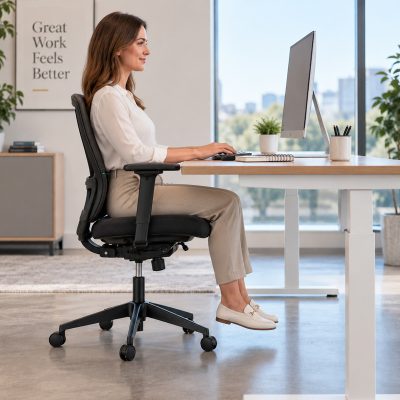
For shorter people, a fixed-height desk can create an awkward dilemma. If your office chair and desk setup is ergonomically correct, your feet often dangle and don't reach the floor. Lower your chair so your feet reach the floor, and the desk becomes too high leading to muscular strain in your arms, upper back and shoulders.
A footrest solves this by bringing the floor up to you, supporting your feet at the right height without compromising the rest of your sitting position.
Why do my feet dangle even when my desk setup is correct?
Because correct posture at a fixed-height desk is set by the desk, not the floor. Mayo Clinic's office ergonomics guide recommends setting chair height so your elbows sit at roughly 90 degrees at your keyboard, but that height is measured from the desk, not from where your feet happen to land. If you're on the shorter side, getting your arms right often leaves your feet dangling and unsupported.
This is a structural mismatch between body height and a fixed desk, not a posture mistake.
What happens if your feet don't reach the floor?
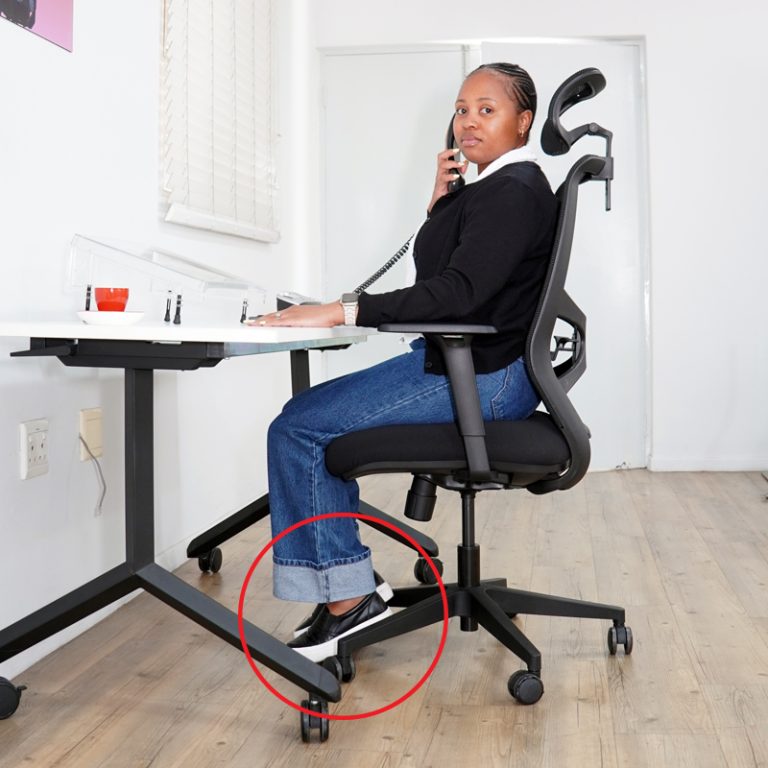
Dangling feet shift the weight of your legs onto the underside of your thighs, right at the edge of the seat, and that pressure has a knock-on effect through your whole lower body.
- Circulation is affected. The Canadian Centre for Occupational Health and Safety notes that a chair seat pressing into the back of the thighs and knees can restrict blood flow to the lower legs. This is exactly what happens when feet aren't supported and legs hang unsupported off the seat edge.
- Your pelvis tilts. Unsupported legs pull the pelvis into a backward tilt. You won't feel this while seated, it shows up as lower back pain when standing up from your desk, once you're no longer braced by the chair.
- Workarounds create new problems. Crossing your legs or resting feet on the chair base feels like a small adjustment, but it relocates the strain rather than resolving it. Crossed legs shift hip alignment, and propping feet on the chair base usually means leaning forward, adding more load to the lower back.
- It compounds over time. None of this happens in one sitting. Repeated, daily compensation is how an occasional ache becomes chronic lower back pain.
Karo's own guide to ergonomics in the workplace notes that low back pain affects an estimated 619 million people worldwide (WHO). Making small setup changes to prevent back pain are worth taking seriously.
What happens if you lower your chair instead?
For a short person, lowering your chair so your feet reach the floor usually moves the problem upwards.
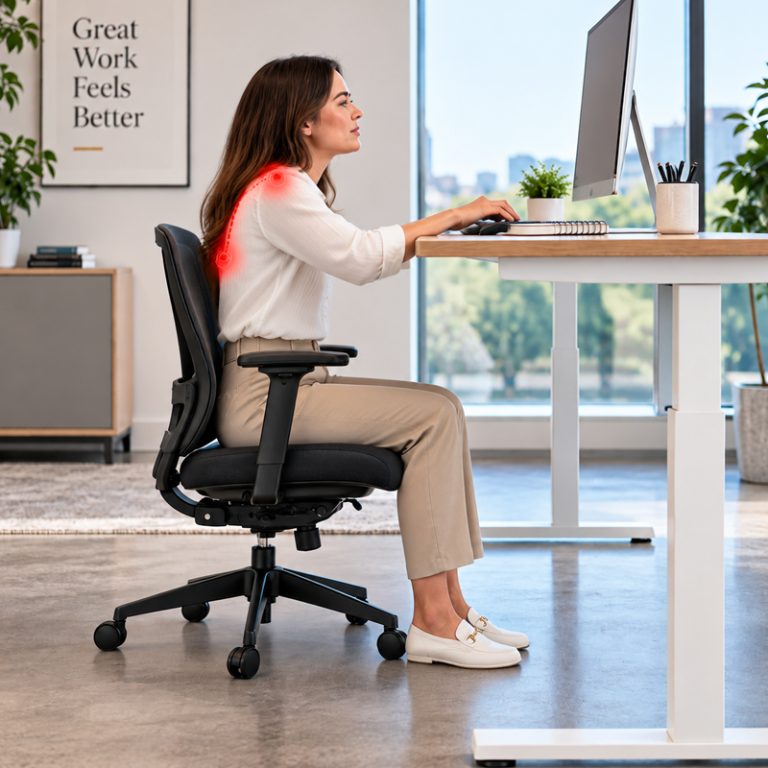
With a fixed-height desk, lowering your chair can leave the desk too high, forcing you to lift your shoulders and arms to reach the keyboard. Over time, this awkward position can create muscular tension through your neck, shoulders and upper back.
Mayo Clinic's guidance is consistent here too. Your shoulders should stay relaxed with elbows close to the body, not raised or reaching - something that becomes impossible once the desk to chair ratio is compromised.
Over time, this trades a dangling leg problem for a shoulder, neck and upper back one.
How should you be sitting at a desk?
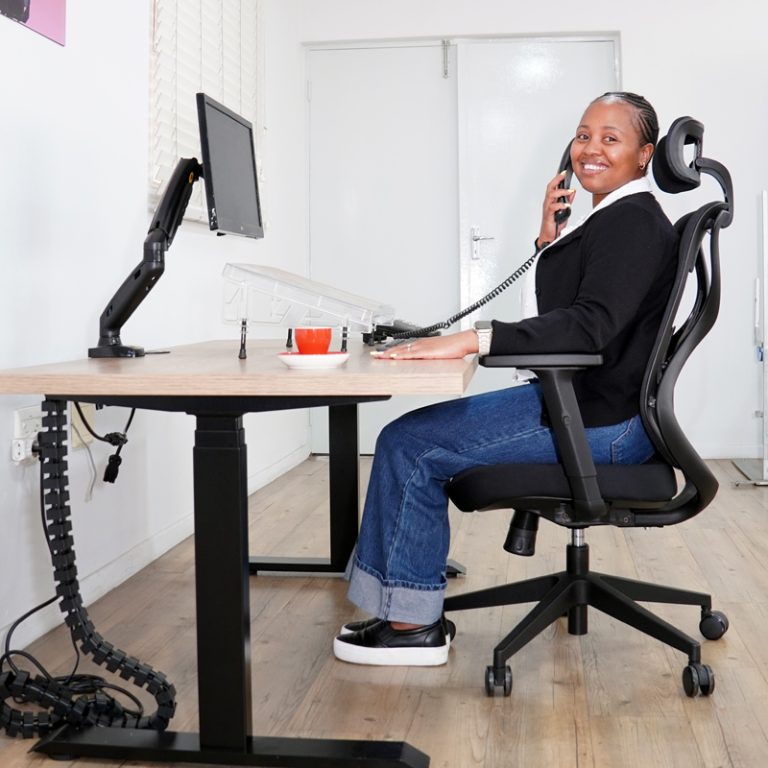
Correct sitting posture means your head, shoulders, back, arms, hips, and knees are all aligned and your feet are supported, not dangling.
- Shoulders relaxed, not elevated
- Elbows bent at roughly 90 degrees
- Forearms parallel to the floor and supported by the armrests or desk
- Feet flat on the floor or on a footrest
- Knees slightly lower than hips
- A 2-3 finger gap between front edge of the seat and the back of your knees
- Back fully supported by the backrest with the lumbar support fitted into the curve of your lower back.
Why don’t all footrests work for short people?
Your feet need room to move and reposition naturally. A footrest that restricts movement can create new discomfort, rather than solve the problem.
A footrest that's too narrow forces feet into one fixed position. Your legs need to shift and resettle naturally throughout the day, not stay locked in place.
The Step-Up Footrest was designed with this in mind:
- sufficient width for natural repositioning
- a tilting platform to allow natural and healthy movement during the day
- adjustable height so it matches your exact desk-and-chair combination rather than a generic average.
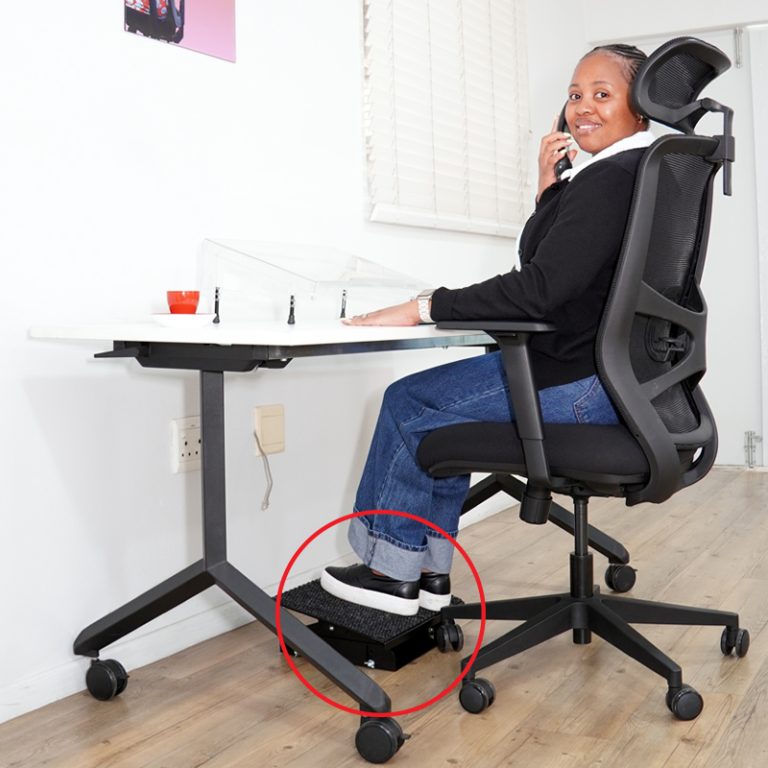
The bottom line - Why a footrest is important for short people
If you’re shorter than average and your feet don’t reach the floor when you’re sitting correctly at a fixed-height desk, the problem isn’t your posture, it’s the gap between your chair and the floor.
A footrest closes that gap, allowing you to keep your chair at the correct height for your desk while giving your feet the support they need. You get the ergonomic benefits of a properly adjusted chair without compromising your comfort.
Step-Up Footrest
By the same author:


Common Issues with Ergonomic Chairs and Practical Solutions for a Pain-Free Workday
Even with the best intentions, ergonomic chairs can sometimes fall short of expectations
Chair Back Support: 5 Chairs That Protect Your Spine While You Work
Discover Keith’s top 5 ergonomic chairs at Karo that provide exceptional support, helping to prevent back pain effectively.