

Ergonomics of an Adjustable Standing Desk: Benefits, Setup and Best Practices
- Updated:
About the author:

Ronel Hendry
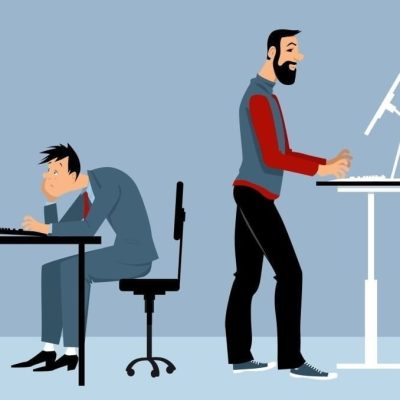
“Create Healthy Workspaces”
If you spend most of your day behind a computer, chances are you spend too much time sitting. Prolonged sitting can contribute to discomfort, stiffness and poor posture, yet standing all day is not the answer either. A height-adjustable standing desk provides a practical ergonomic solution by allowing you to alternate between sitting and standing throughout the day. What are the ergonomics of a standing desk and what are the advantages of using one?
Quick Summary
Standing desks are most effective when you alternate between sitting and standing during the day.
Proper ergonomics matter: desk height, chair setup, monitor position and posture all affect comfort.
Standing all day is not recommended; gradual movement throughout the day is best.
A correctly setup standing desk and workstation may help reduce stiffness, improve energy levels and support better workplace wellness.
What Is a Height Adjustable Standing Desk?
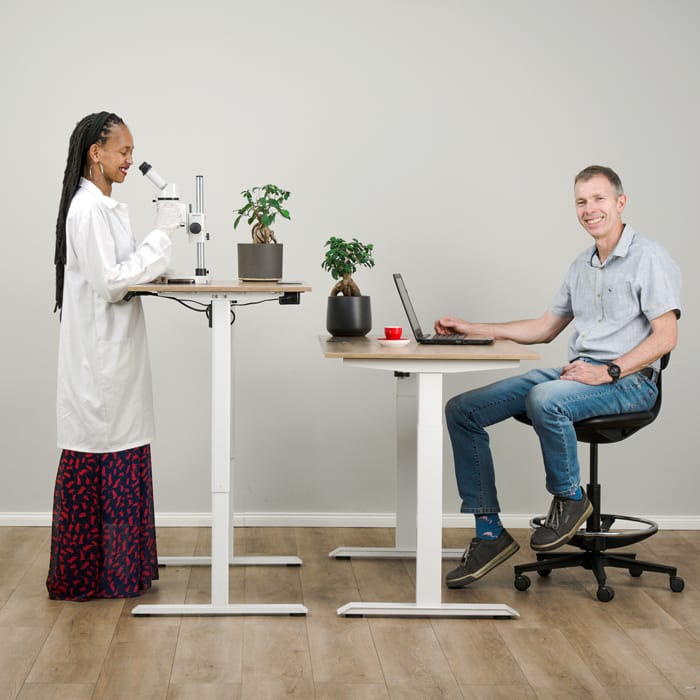
A height-adjustable standing desk is a workstation that can move between sitting and standing heights. Some models use electric motors, while others are manually adjusted.
The concept is simple: rather than being locked into a single posture for hours, a height-adjustable desk allows you to alternate between sitting and standing while keeping your workstation at the correct ergonomic height for your body.
The 7 Advantages of a Standing Desk
1. Standing lowers your risk of weight gain and obesity
Weight gain is caused by consuming more calories than you burn. Without doubt, exercise is the most effective way to burn calories. However, as found in studies conducted by Harvard Medical School, simply standing instead of sitting can also be beneficial because the energy consumed during standing is higher than when sitting.
2. Standing may lower your risk of heart disease.
Studies of the effects of continual sitting on heart health have shown that the more time you spend sitting, the greater your risk of developing heart disease.
3. Standing may lower blood sugar levels.
Studies show that standing at work can lower blood sugar levels, especially after lunch.
4. An important advantage of using a standing desk is reduced lower back pain
A standing desk allows you to adjust the height of your desk so that you can set up your office chair correctly. Once your chair is properly positioned, the desk height can then be adjusted to suit your seated position, enhancing the ergonomics of your workstation. This personalised setup significantly reduces the common complaint of strain on the shoulders, neck, and lower back pain. This issue is more pronounced among taller individuals who would also benefit from having a look at the Best Office Chairs for Tall People.
Numerous research studies have consistently demonstrated that one of the primary advantages associated with the adoption of a standing desk or a desk converter is the substantial reduction of chronic back pain that results from prolonged sitting. Standing Desks: How They Help You Beat Inactivity
It is well known that remaining in one position, whether sitting or standing for long periods at a time will have negative effects on your overall health. 10 Things That Happen When You Sit Down All Day.
Affordable electric sit-to-stand or height adjustable standing desks are now readily accessible in South Africa. Which Height-Adjustable Desk Should You Buy in South Africa? An Honest Guide
5. Standing can improve your mood and energy levels.
Alternating sitting and standing while you work, or using a desk sit stand converter, appear to have a positive influence on overall wellbeing. Studies have shown that users are less stressed and fatigued compared to those who remained seated the entire working day. Another study found that standing desks can improve mood and energy levels.
6. A standing desk may improve productivity
A common concern about standing at your work surface, is that it reduces productivity. However, studies have shown that alternate sitting and standing has no significant impact on productive output. Bearing in mind that standing improves mood and energy, using a standing desk is more likely to boost productivity rather than hinder it.
7. Standing more may support long-term health
Studies have found a link between increased sitting time and early death, which is not surprising given the strong correlation between sedentary time, Type 2 diabetes and heart disease. Affordable sit-stand desks are now widely available in South Africa, making it easier than ever to incorporate more movement into your workday.
What are the negative effects of prolonged sitting and standing?
Changing from sitting to standing will not necessarily combat the negative effects of sitting statically all day. In the same way, standing all day at work is also unhealthy. Everyone knows sitting all day at the office is bad for you, but standing might not be much better - Business Insider, Australia.
Negative effects of sitting
- Fatigue, which promotes a bad sitting posture.
- Poor blood circulation.
- Lower back and shoulder pain.
- Often results in skeletal and muscular disorders like misalignment of the spine, muscle tension in the neck, back and shoulders.
- Poor concentration.
- Can lead to weight gain.
Negative effects of standing
- Causes lower limb fatigue.
- Cramping and swelling of the legs.
- Lower back pain.
- Increased pressure on your knees, hips and feet.
- Varicose veins and/or inflammation of veins.
- Misalignment of the spine due to shifting weight onto one leg.
- Poor concentration.
Are Standing Desks Actually Ergonomic?
Yes, provided they are adjusted correctly. A standing desk is ergonomic because it allows you to position your work surface at the correct height for your body, irrespective of whether you are sitting or standing. However, standing for long periods with poor posture can create new problems, including leg fatigue and lower-back strain. Healthy Sitting Position at a Desk: How to Sit Correctly at Work
The goal is not to stand all day. The goal is to alternate between sitting and standing comfortably.
The Ergonomics of a Standing Desk: How to Set It Up Correctly
a. Desk Height
- Elbows at approximately 90°
- Forearms parallel to the floor
- Shoulders relaxed
b. Monitor Height
- Top of screen at or slightly below eye level
- Screen roughly an arm's length away
c. Keyboard and Mouse Position
- Close to the body
- Wrists neutral
- Elbows tucked in
d. Standing Posture
- Weight distributed evenly
- Knees slightly bent
- Avoid leaning on one leg
e. Flooring and Footwear
- Supportive shoes
- Anti-fatigue mat if standing for extended periods
How Long Should You Stand at a Height Adjustable Desk?
There is no perfect number of hours. A practical approach is to alternate positions regularly rather than staying in one posture too long. A simple progression is best:
- Start with 15–30 minutes of standing at a time.
- Gradually increase if comfortable.
- Aim to change posture every 30–60 minutes.
Common Guideline
Many ergonomists suggest a mix of sitting and standing rather than extremes. For example, over an 8-hour workday, you might spend roughly:
- 4–5 hours sitting
- 2–4 hours standing
- The remainder moving or taking short breaks.
The exact balance depends on your comfort, fitness and type of work.
Ergonomics of a Standing Desk - Common Mistakes
a. Standing All Day
More standing is not always better. Extended standing can lead to fatigue, sore feet and lower-back discomfort. Too much of anything is bad, so don’t negate the advantages of a standing desk by totally eliminating sitting.
b. Not having your standing desk at the right height
A good rule to follow for standing desk posture and height is to keep your elbows at about 90 degrees and your screen at, or slightly below, eye level.
c. Locked knees or standing still
Standing rigidly reduces comfort and circulation. Keep a slight bend in the knees and shift weight occasionally. Move around while you work.
d. Having a bad posture
Posture is something that is extremely important to our health, yet we rarely pay any attention to it. Just like when you sit, having bad posture when you stand can result in lower back pain.
e. Never Changing Position
Even with a standing desk, remaining still for hours is not ideal. Small movements and posture changes matter.
What type of height adjustable standing desk should you consider for optimal ergonomics?
a. Manual height adjustable standing desks
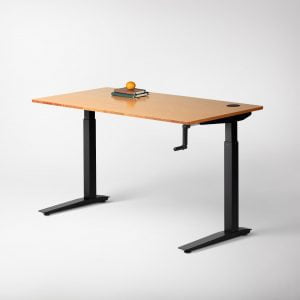
There are 2 basic options when it comes to manual height adjustable desks. The first uses a simple crank, and the second, a pneumatic lifter to raise and lower the desk.
i) Crank operated standing desk
- The crank handle requires greater effort to raise and lower the desk.
- Slower to adjust.
- There is a risk that it will be adjusted less frequently. Poorer ergonomics will often result due to the time and effort involved in changing the height of the standing desk.
- More affordable than gas assisted and motorised options.
ii) Pneumatic lift standing desk
- Pneumatic height adjustment is similar to your office chair.
- Easier to adjust than those desks with a crank handle.
- No manual lifting is required due to the pneumatic powered mechanism. However, more effort is necessary to lower the desk as your body weight is required to press down on the desk.
- More affordable than electric desks.
b. Electric height adjustable standing desks
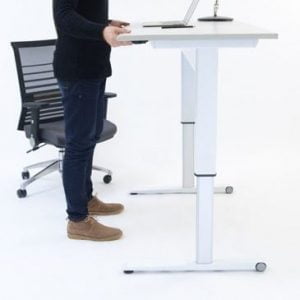
These ergonomic height adjustable standing desks are freely available in South Africa. The electronic control system enables you to change the desk height within seconds at the simple touch of a button.
For most office workers, the ergonomics of a standing desk are significantly improved with an electric height adjustment system, as it encourages regular transitions between sitting and standing by making adjustments fast, simple and convenient.
Frequently Asked Questions (FAQ's)
a. Are standing desks worth it?
For many people, yes. The biggest benefit is the ability to alternate between sitting and standing, which encourages movement and may improve comfort during long workdays.
b. Is it better to stand or sit while working?
Neither is best on its own. The healthiest approach is to alternate between sitting, standing and moving throughout the day.
c. Can a standing desk reduce back pain?
It may help reduce discomfort for some people, particularly when prolonged sitting is a trigger. However, proper setup and posture are essential, and standing all day can also cause discomfort.
d. Do I need an anti-fatigue mat?
Not always, but many users find one helpful for reducing foot and leg fatigue during longer standing periods.
e. How often should I switch between sitting and standing?
A practical target is every 30–60 minutes, though comfort and work demands vary from person to person.
f. Are electric standing desks better than manual standing desks?
The one type is not inherently better than the other, however electric models are easier to adjust and remove the 'hassle' of manual adjustment. Furthermore, most electric models have a memory function that allows you to preset your preferred height settings.
Conclusion
The ergonomics of a standing desk are not just about standing. They are about creating a workstation that allows you to move, change posture and work comfortably throughout the day. The greatest benefit of a height-adjustable desk is not that it allows you to stand more, but that it allows you to avoid remaining in any one position for too long.
A correctly adjusted standing desk can:
- reduce the negative effects of prolonged sitting
- encourage healthier movement
- and improve day-to-day comfort at work.
The key is balance: sit sometimes, stand sometimes, and keep moving throughout the day.
HiLo Height Adjustable Standing Desks
By the same author:

The Ultimate Guide to Exercises and Stretches for Office Workers
Are you feeling stiff and fatigued after long hours at your desk? Reduce aches, improve focus and feel better throughout your working day.

The Health Risks of Sitting Too Long – and 5 Practical Ways to Reduce Them
Discover how prolonged sitting affects your body, what the research says, and the practical steps you can take to stay healthier and more comfortable at work.
Orthopedic vs Ergonomic Office Chairs: What’s the Difference and Which Should You Choose?
Ergonomic and orthopedic office chairs are very similar. What are the major differences and which is best?