

The Ultimate Guide to Exercises and Stretches for Office Workers
- Updated:
About the author:

Ronel Hendry
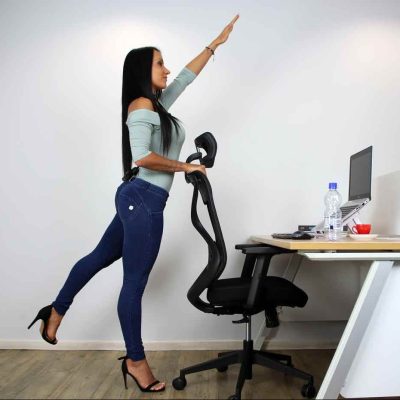
“Create Healthy Workspaces”
Office workers spend more than 90% of their working hours sitting at their desks. According to the World Health Organization (WHO), a sedentary lifestyle is leading cause of disease and disability. After a few hours at your desk, you may notice your neck becoming stiff, your shoulders tightening and your concentration beginning to fade. By the end of the day, sitting for long periods can leave you feeling tired, uncomfortable and less productive than when you started. For office workers, the good news is that a few simple exercises and stretches performed throughout the day can make a significant difference. Regular movement helps reduce muscle tension, improve circulation, support better posture and increase energy levels.
In this guide, you will learn the best exercises and stretches for office workers, including routines for your neck, shoulders, back, hips, legs, wrists, eyes and core. You will also discover simple breathing exercises that can help reduce stress and improve mental clarity.
What Are the Best Exercises for Office Workers?
The most effective office exercises target the areas most affected by prolonged sitting. You do not need a gym, special equipment or large amounts of time. Most of these exercises can be completed at your desk in just a few minutes.
Target Area | Key Benefits |
|---|---|
Neck and shoulders | Reduces tension and stiffness |
Upper and lower back | Supports posture and reduces discomfort |
Legs and hamstrings | Improves circulation and reduces tightness |
Hips | Improves mobility and flexibility |
Core | Supports spinal stability |
Wrists and arms | Reduces strain from keyboard and mouse use |
Eyes | Helps relieve screen-related eye fatigue |
Deep breathing | Reduces stress and improves concentration |
Why Is Sitting All Day Bad for You?
Modern office work often involves sitting for extended periods. While sitting itself is not harmful, remaining in the same position for hours can place excessive strain on your muscles, joints and spine. Prolonged sitting may contribute to:
- Neck and shoulder tension
- Lower back discomfort
- Tight hips and hamstrings
- Poor circulation
- Eye strain
- Reduced energy levels
- Increased stress and fatigue
The good news is that a walk break every hour for five minutes is enough to improve mood and lower fatigue. - BBC
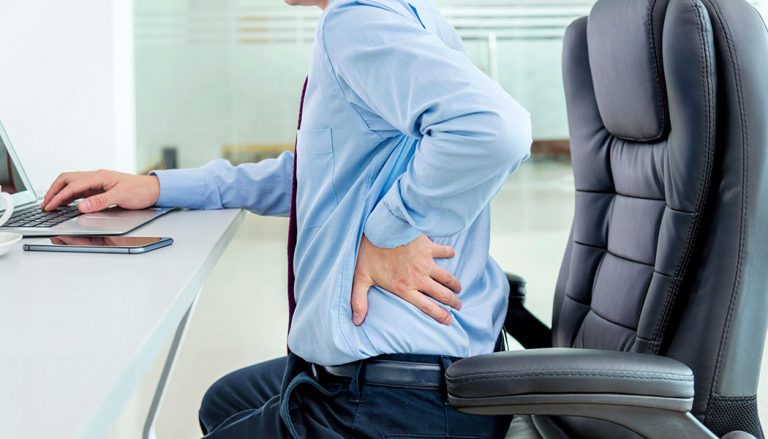
According to the World Health Organization (WHO), physical inactivity is a significant risk factor for numerous health conditions. Regular movement throughout the day is one of the simplest ways to counter the effects of prolonged sitting.
A Simple Daily Exercise Plan for Office Workers
If you are unsure where to start, follow this simple 4-step plan:
Step 1
Adjust your workstation to support good posture.
Step 2
Stand up and move every 45 to 60 minutes.
Step 3
Complete one or two stretches during each break.
Step 4
Perform the full exercise routine at least once per day.

Stop exercises if you experience any pain or discomfort.
Consult your healthcare professional if pain or discomfort persists.
1. Neck and shoulder exercises for office workers (2:29min video)
Your head weighs several kilograms. When you lean forward to view a screen, the muscles in your neck and shoulders must work harder to support that weight. Over time this can lead to stiffness, tension headaches and discomfort.
Exercises Included
- Head drops
- Side bends
- Neck flexion
- Neck rotations
- Shoulder shrugs
- Posterior shoulder stretches
Benefits
- Reduces neck tension
- Improves flexibility
- Encourages better posture
- Helps relieve shoulder tightness
The muscles at the back of the neck commonly feel tight as they overwork to hold the head upright. A simple way to help prevent neck and shoulder pain associated with computer use, is to follow these simple neck and shoulder stretches that can easily be done in the office or at home.
2. Upper and lower back exercises for office workers (2:48min video)
Many office workers experience back discomfort due to prolonged sitting and poor posture. Stretching and strengthening the muscles that support your spine can help reduce tension and improve mobility.
Exercises Included
- Seated spinal rotations
- Leg hugs
- Back extensions
- Reach for the sky
- Back stretch #1
- Back stretch #2
Benefits
- Supports spinal health
- Improves mobility
- Reduces muscle tightness
- Encourages healthy posture
Office workers that sit for long periods without any breaks or exercises, often experience some form of back pain. Regular exercises and stretches can strengthen the muscles that support your back, thereby reducing the risk of back pain. In addition, it is essential that your chair is correctly adjusted. How to adjust your chair to prevent back pain.
3. Leg, hamstring and quad stretches for office workers (2:24min video)
Sitting for extended periods shortens the muscles at the back of your thighs. Tight hamstrings can contribute to lower back discomfort and reduced mobility.
Exercises Included
- Hamstring stretch #1
- Hamstring stretch #2
- Calf raises
- Bent knee stretch
- Quad stretch
Benefits
- Improves circulation
- Increases flexibility
- Supports healthy movement
- Reduces muscle tightness
Tight hamstrings are often caused by sitting too much in the workplace. What is a good sitting position in the office?
4. Hip stretches and exercises for office workers (1:08min video)
Long periods of sitting can cause the hip flexor muscles to tighten. This may restrict movement and place additional stress on your lower back and surrounding muscles. According to the NBC News, sitting for long periods can result in tight hips.
Exercises Included
- Seated hip stretch
- Wall sits
Benefits
- Improves hip mobility
- Reduces stiffness
- Supports healthy posture
- Enhances overall movement
5. Core exercises for office workers (1:27min video)
Our core connects every part of our body. Sitting for long periods weakens the core so it is essential to build its strength. Doing exercises and stretches for your core while you are in the office, is both quick and easy. Your core stabilises your spine and supports almost every movement you make. Prolonged sitting can weaken these muscles over time.
Exercises Included
- Seated bicycle crunches
- Oblique twists
Benefits
- Improves stability
- Supports spinal alignment
- Encourages better posture
- Helps reduce lower back strain
6. Wrist and arm stretches for office workers (2:56min video)
Hours spent typing and using a mouse can place stress on your fingers, wrists, forearms and shoulders. Regular stretching helps maintain mobility and reduce tension.
Exercises Included
- Arm pulses
- Arm circles
- Prayer stretch
- Wrist rolls
- Figure 8
- Arm and wrist stretch #1
- Arm and wrist stretch #2
Benefits
- Improves flexibility
- Reduces muscle tension
- Supports healthy movement patterns
- Helps prevent repetitive strain injuries
Working long hours at the computer every day can place serious strain on your fingers, hands, wrists and arms. Correctly setting up your workspace can prevent muscle strain and other injuries in your fingers, wrists, hands and arms.
7. Deep breathing exercises (0:50 min video)
Many people unconsciously take shallow breaths while concentrating at work. Diaphragm or deep breathing is easy to learn. You can do it whenever and wherever you want to relax and reduce stress. Other benefits associated with deep breathing include reducing blood pressure, slowing down your heart rate and increasing oxygen in your blood which increases stamina and promotes healing. Benefits of deep breathing – Harvard Medical School.
Exercise Included
- Deep breathing
Benefits
- Reduces stress
- Promotes relaxation
- Improves focus
- Supports mental wellbeing
8. Exercises for eyes (1:57min video)
Staring at a computer screen for long periods may contribute to dry eyes, headaches and visual fatigue. Eye exercises can help reduce strain and encourage healthy viewing habits.
Benefits
- Relieves eye fatigue
- Improves comfort
- Reduces headaches
- Supports productivity
Frequently Asked Questions (FAQ's)
a. How Often Should Office Workers Stretch?
Ideally, stand and move every 45 to 60 minutes. Even a brief stretch can help reduce stiffness and improve circulation.
b. What Is the Best Exercise for People Who Sit All Day?
A combination of walking, hip stretches, back stretches and posture exercises provides the greatest benefit.
c. Can Stretching Improve Posture?
Stretching helps reduce muscle tightness that may contribute to poor posture. Combining stretching with proper workstation setup and ergonomic seating is even more effective.
d. Do I Need Special Equipment?
No. These exercises can be performed in most office environments without equipment.
Remember: Exercise Alone Is Not Enough
Regular movement is essential, but it is only one part of creating a healthy workspace. If your chair does not properly support your posture, discomfort can build throughout the day regardless of how often you stretch. Combining regular exercise, correct workstation setup and a high-quality ergonomic office chair creates the foundation for long-term comfort, wellbeing and productivity.
Conclusion
You should not have to accept neck pain, back discomfort and fatigue as part of your working day. By incorporating these simple office exercises and stretches into your daily routine, you can improve posture, reduce muscle tension, increase energy levels and maintain better focus throughout the day. Start with a few exercises, perform them consistently and build healthy movement habits that support your wellbeing for years to come.
By the same author:


NetOne vs Karo: How Do These Ergonomic Chairs Compare?
The NetOne chair is well-known in South Africa’s ergonomic seating market, and understandably, clients want to compare it with other reputable options
Lower Back Pain Relief: A Specialist’s Guide
Delving into how ergonomic chairs, orthopedic chairs, and kneeling chairs can effectively alleviate lower back pain.
How to Choose a Fully Adjustable Office Chair (And Why It Matters)
We are all different, so when you buy a new office chair, look for one that has all the adjustability features.